Knowing the World Anew (II): Analog & Digital
The idea for this piece came mostly from the podcast Incomputable and its episode 37: A Vast Resemblance Links All Things. 1
I have listened to that episode many, many times, and I cannot recommend it enough.
As words and symbols go, the difference between Analog and Digital is one you can't afford to ignore.
"Analog" means "a mapping from one continuous change to another continuous change." It is infinitely precise, full of detail, messy and organic, fluid and sensual.
"Digital" simply means "of digits, numerical." It refers to "pointing at other things in a discrete, finite way." It is clearly defined, free of ambiguity, deterministic, computable.
- Analog is an isomorphic migration between different carriers. Digital belongs to no carrier at all.
- Analog can be refined and described without end. The description of Digital is finite.
- Analog is informal. Digital is formal.
A few examples of the distinction:
Sound
Vinyl records and old-style radio broadcasts are Analog. Audio files in digital formats are Digital.
The principle behind a record is to carve the continuous sound waves in the air into the grooves of the disc. Radio works in a similar way: sound waves are continuously turned into electromagnetic signals, and at the receiving end those signals are continuously turned back into sound.
A digital audio file is something else entirely. We have no way to store infinitely fine-grained sound, because that would take infinite storage space, so we have to make compromises.
For a digital audio file there is bit depth (from the quietest to the loudest sound, how many "pitch" possibilities we can have) and sampling rate (how many samples per unit of time we pull from the continuous signal to build the discrete one). The pitches that fall between the two smallest steps, and the changes in the wave within the smallest interval of time, have to be thrown away (rounded off) before the file can sit inside digital memory.
For more, listen to the episode S2E1 MP3 from the podcast "Absence."
Computers
There are two kinds of computers in the world: the analog computer and the digital computer.
To work out where a planet will be a year from now, you could use an orrery to simulate the planet's orbit, then turn a crank to spin it and "speed up time," and read off the planet's future position. That is the Analog way of thinking.
Early in the history of digital computing, analog computers were already doing differentiation and integration with precise gear trains. They predicted lunar eclipses and tides and guided anti-aircraft weapons. But an analog computer can't be programmed. It can only carry out the intent it was built for, and mass production, miniaturization, and commercialization were all very hard, so digital computers overtook it quickly.
When we say "computer" now, we always mean the digital kind. But things are turning. Training a neural network depends on enormous amounts of matrix multiplication, which runs inefficiently on the traditional von Neumann architecture (the digital computer). Now analog microelectronic devices have appeared (compute-in-memory devices) that use analog signals (a continuous range from 0 to 1) in place of digital ones (just 0 or 1), and they can cut energy use dramatically while doing the same job.
For more, watch these two videos on analog computers from Veritasium:
Language
If I ask you "how tall is Mount Everest," and you happen to know, you'll tell me it's 8,848 meters, or more precisely 8,848.86 meters. You can't, and you don't need to, tell me anything else. That is Digital.
But if I ask you "what is Mount Everest like," you'll describe how it towers into the clouds, how the mist wreathes around it, how pure and untouched it is, how it stands there, great and unmoving.
I can keep asking, "Anything else? And then?" and you could seem to go on answering forever. That is Analog.
When Chen Jiaying uses this example, he doesn't bring up the Analog and Digital distinction at all. In his book he uses it to talk about "perceptual speech" and "rational speech." It seems to me that the pair of ideas Chen discusses there, "perception" and "rational knowledge," has a strong resemblance to Analog and Digital.
For more, read Chen Jiaying, Perception, Rational Knowledge, Self-Knowledge, Beijing: Beijing Daily Press, 2022, page 126.
Analog and Digital are a hidden and ambiguous pair of opposites. Trying to draw a clean line between them is itself a Digital act, so for an Analog thinker the two are tangled together and mutually dependent. One of the goals of digitalization is to simulate our real world, and analogy in turn can never escape the need to refer and to quantify.
This section is about Digital alone.
In 37: A Vast Resemblance Links All Things, the host, Bao Ting, says:
"Digital does exactly what our fingers do."
Stretching that a little, here are five things it does:
Counting, quantifying, calculating
The most basic thing Digital does. It needs no further explanation.
Pointing (reference, index, pointer)
One of the most important differences between Digital and Analog is that Digital simplifies and abstracts whatever it points at.
We use GDP and broad market indices to point at the macroeconomic state of two great powers, and we use numbers to stand in for each particular person who died in a war or a pandemic. Using a smaller, more understandable amount of data to point at something far more complex and tangled, stripping away redundant detail so it's easier to discuss and analyze and easier to find patterns inside the chaos: this is the feature and the strength of Digital.
Comparing
A number carries comparison inside it from the start.
When I say a test score is 85, that isn't a lonely 85. It is tied to "higher than 80" and "lower than 90." A single score is bound up with a whole system that judges people on one dimension by comparison.
When you run into a young person at a café, someone who loves the world and is full of hope and confusion about the future, you wouldn't judge them with a system like that, because personality and spark are "incomparable." They are Analog, not Digital. But the moment you hang a "value" on a person, whether it's a height of 180, a salary of a million, or a grade of A+, there is no escaping that tinge of comparison.
When we say "cold, hard numbers," we seem to be reaching for "objectivity," but what we're really reaching for is "comparison."
Digital can't be separated from the ideology of meritocracy. A society where everything can be set on the scale and weighed is by no means an ideal one.
Manipulation and management
Put all of the above together and Digital can serve to manipulate and manage. People often say we are now "controlled by numbers." This doesn't only mean "something is controlling me, and that thing is numbers." It means "it is precisely because numbers exist that I feel controlled." Exam scores, performance reviews, digital management, electronic files, price discrimination through big data, recommendation algorithms. The world of numbers forms one tight, orderly system. It gives humanity the power to cooperate at enormous scale, and it also lets every one of us feel the violence that comes from that same system.
Reasoning without feeling (the Turing machine)
Digital is also the engine driving the explosion of technology. The most important spark of the Scientific Revolution wasn't scientists boldly defying the Church. It was the founding of a tradition of scholarly critique and the mathematization of the natural sciences.
(A small aside: heliocentrism had been proposed over and over since the Greeks, and there were even supporters of it within the Church. The Copernican revolution wasn't about proposing heliocentrism, and the Scientific Revolution didn't happen as simply as the textbooks describe.)
Why does mathematization matter so much? Why does a discipline only earn the name "science" once it has been mathematized? Because mathematization makes "reasoning without feeling" possible. The arguments of philosophers (apart from the rationalists and the logicians) tend to be short. The concepts may be hard to grasp, the thought obscure and deep, but you don't find "long-range reasoning," no airtight, tightly linked proof running on and on. In mathematical physics this is everyday business. Theory papers with proofs running dozens of pages are everywhere.
For just this reason, the Greeks could deduce that the Earth is round (from their grasp of plane geometry, and from watching the horizon and lunar eclipses), and could deduce the circular motion of heavenly bodies, yet they had no possibility, the way modern physicists do, of deducing neutron stars, black holes, the uncertainty principle, and quantum fluctuations out of equations. Mathematics is our only way of doing "long-range, precise reasoning." It lets our sight reach into the microscopic and the cosmic that perception can never touch.
If I had to name a capacity that belongs to humans alone, I wouldn't answer "language" or "intelligence." I would answer, carefully:
Perhaps the capacity for Digital is the one humans have and other animals do not.
Liu Cixin tells this story in his novella Heard It in the Morning:
Just as humanity is about to run an experiment that would destroy the universe, an observer civilization, advanced as gods, forces a halt. To keep any civilization from running a creation-scale experiment that would wreck the cosmos, this civilization has placed warning systems everywhere in the universe. A scientist asks them: when did your warning system on Earth first go off? In Newton's time? In Aristotle's?
The answer comes calmly: "At the end of the Pleistocene, two hundred and seventy thousand years ago, a primitive human looked up at the stars for longer than the warning threshold allowed, showing excessive curiosity about the universe. If that primitive human's few minutes of gazing was the sight of a jewel, then everything you call human civilization since has been nothing but bending down to pick it up."
I love Heard It in the Morning. Liu Cixin's prose was still a little raw when he wrote it, but that doesn't stop the story from being one of the best short and mid-length science fiction works in my mind. The romance of "looking up at the stars" is one no other image can match. Still, I'd feel that the alarm starting to sound from the moment "a primitive human counted on his fingers" fits reality better. The arrival of digitalization let humanity, a weak little civilization that built its walls out of river mud, standing on one small rock in this vast universe, armed only with observation, experiment, and pen and paper, see into the secrets of the great cosmos and the tiny world within.
Of course, Digital has its bad side too. As I said above, digitalization is not an ideology-free process. On the contrary, it carries a kind of violence born of standardization, modernization, and scaling, a structural, top-down alienation and domination of people. And this is exactly the space where Analog and the humanistic spirit ought to step in. That touches on the friction between the two worlds that Analog and Digital span, which I'll leave for section 4.
Digital is more than a double-edged sword. It's more like one dimension of our world (what I'll later call the "realm of numbers"), one of the foundation stones of the modern human world.
The question isn't "when should we use Digital and when shouldn't we?" or "how do we use Digital correctly to make the most of it and avoid the worst?" Digital isn't something you can shake off, or a tool you can take or leave. Digital is the reality we live in. Resisting it is wasted effort. What we should be thinking about is how to coexist with it, how to live alongside it.
This section is about Analog alone.
Digital is intensely rational and loves to sort things into categories. Analog is its opposite. So in the section above, I could carefully sort Digital into types, give it definitions and readings, and explain what Digital is entirely through rational narration. The same method of explanation will not work on Analog.
Ah, how am I supposed to describe Analog to you?
This is the world of the poet, the world of sensibility, the world suffused with the smell of coffee.
Analog is literary. It has a literary logic, a logic built on metaphor and feeling, and it doesn't lean on the logic of Digital. I see someone unhappy, and I wonder whether I've offended them. That is reasoning built on a logic of its own, and it has nothing to do with the airtight logic of Digital.
We can find hidden links and resonances between unrelated things. We can dwell, slowly, on a texture, a mood, a scene, a stretch of experience, one leaf of autumn, one grain of sunlight. That is Analog. Words and feelings are not things you can pull apart. Our private feeling lives inside our words, and feeling can only be expressed through words.
In the broadest sense, "the world" is Analog, because everything we feel of the world around us is "a mapping from one continuous change (the world inside and out) to another continuous change (the feeling in the heart)."
So, just like Digital, Analog is also a dimension of the world. Both are the reality we live in.
So, using Analog versus Digital, we can split the Symbolic into two: I'll call them the "realm of feeling and speech" and the "realm of numbers."
The Symbolic order's transgression upon the Real, the specter of the Real tearing the Symbolic apart. This entanglement of the Real and the Symbolic was a source of destructive force in older societies. But the framework of the Imaginary, the Symbolic, and the Real can't hold the human world of the information age. The theoretical horizons of posthumanism and transhumanism have to be let in.
The human in the information age faces a second entanglement of worlds, which shows up as "the realm of numbers transgressing upon the realm of feeling and speech, the specter of the realm of feeling and speech tearing the realm of numbers apart."
The "realm of feeling and speech" is built on metaphor. Our sense of the real world gets abstracted into symbols and words, and through language a reader "experiences," from their own experience, the experience that another's words point at. So this world is different for every person, fluid, and unfixed.
The "realm of numbers" does away with that fluidity and unfixedness. The world of numbers is built on formal systems. Binary storage is discrete, of finite precision, so it carries quantification, simulation, manipulation, and management. The Real, infinitely precise and complete in its detail, and the realm of feeling and speech, shimmering and wholly subjective, are both impossible to quantify and compute.
...In that Empire, the Art of Cartography attained such Perfection that the map of a single Province occupied the entirety of a City, and the map of the Empire, the entirety of a Province.
In time, those Unconscionable Maps no longer satisfied, and the Cartographers Guilds struck a Map of the Empire whose size was that of the Empire, and which coincided point for point with it.
The following Generations, who were not so fond of the Study of Cartography as their Forebears had been, saw that that vast Map was Useless, and not without some Pitilessness was it, that they delivered it up to the Inclemencies of Sun and Winters.
In the Deserts of the West, still today, there are Tattered Ruins of that Map, inhabited by Animals and Beggars; in all the Land there is no other Relic of the Disciplines of Geography.
(complete text)
Borges, "On Exactitude in Science"
The realm of numbers is a "map." There is a mountain in the world, and on the map it becomes a triangle symbol or a set of contour lines, with a number written beside it to mark the height. Notice that the point of this symbolization is not "the symbol standing in for the real thing" (that is the Symbolic transgressing upon the Real). The point is the process of turning it into numbers, which turns a peak in the real world into something quantifiable, something computable. However fine the map, it's still hugely blurry and distorted next to the real terrain. But it's exactly because of this that digitalization can give everything a scale, and so this world of numbers becomes something you can quantify, measure, model, and compute.
The realm of numbers wasn't created in the information age. Its history reaches back to the very instant a human first used numbers to measure the scale of the world.
The real system, the actual system, is our present way of looking at things, which is reason itself. If you tear down a whole factory but the rationality that built it is still standing, then that rationality will simply build another factory. If a revolution destroys a government, but the systematic patterns of thought that produced that government are left intact, then those patterns will repeat themselves. There's so much talk about the system. And so little understanding.
Steel has no more shape than this old pile of dirt on the engine here. These bits of pebble. That's all steel is. Reason. The shape is all conceived in someone's head. That's important to see. The steel? Hell, even the steel is out of someone's head. There's no steel in nature. Anyone from the Bronze Age could have told you that. All nature has is a potential for steel. There's nothing else there. But what's "potential"? That's also in someone's head. Ghosts.
Pirsig, Zen and the Art of Motorcycle Maintenance
The realm of numbers is a lot like the Symbolic, but the realm of numbers allows no ambiguity. The realm of numbers is "formal."
"Formal" means a thing doesn't depend on its carrier. The nature of something is decided by a certain numerical relation, and everything is built into a harmonious order according to certain numerical proportions, while the material carrier underneath doesn't matter.
A video game draws mountains, rivers, and grass with computer graphics. What we see on the screen is a rendered two-dimensional image, while all the model entities (the matter) and the relations and interactions between them (the physics) are saved and recorded as data.
If the precision of the model entities is pushed to the extreme, they become no different from the matter of the real world. Push the precision of the relations and interactions between entities to the extreme, and the matter is given physical laws no different from the real world's. What a computer program really is, at bottom, is a stretch of data, a string of numbers. A computer program is "formal." Whether it runs on transistors or vacuum tubes, the abstract program is the same, and it runs either way.
Industry has the idea of the "digital twin." A digital twin reproduces every parameter of a real object inside a virtual space, so it can reflect the whole lifecycle of the corresponding physical equipment. A digital twin isn't only a model or a simulation. The digital twin is the real object itself. The matter and the carrier they rely on are different, but from the standpoint of form, there's no true or false between material elements and matrix data. The real object isn't truer than the digital twin, and the digital twin isn't any falser than the real object.
The world of the future is arriving far sooner than you imagine. The smartphone long ago stopped being just a "tool" for humans and is slowly becoming an "organ." In science fiction, the human brain can plug into external storage to boost memory.
In fact, that wish has already been partly granted. For people in the habit of jotting things down, the phone has become the brain's external hard drive. Instant messaging and social media have transgressed upon traditional relationships and ways of communicating. When you see someone on the street wearing Bluetooth earbuds and talking to a distant friend, you'll surely feel the tension of a future about to arrive.
In the post-pandemic era, the line between the virtual world and the real one has blurred. During lockdown, life in the online space was more real than life in reality.
In this sense, the cyborg (the fused system of human and electronic machine) is not what we are going to become. It is what we already are.
In mathematics, the natural sciences, the factory, and the program, Digital is natural, harmless, correct. The realm of numbers does not transgress upon the Symbolic here, because in these settings symbol and meaning are already formalized (an electron is an electron, with no room for being misread). The realm of numbers and the Symbolic are identical, so naturally there's no rupture.
The trouble with the "realm of numbers" is that in this tight, orderly picture there's no place for our joys and our pains, no place for our moral striving and our artistic ideals.
That last passage isn't mine. It's Chen Jiaying's criticism of the "scientific world," and the criticism applies just as well to the "realm of numbers." The "realm of numbers" is bigger than "the world science paints for us." The world of science is far from our daily life, but the realm of numbers is already part of it.
Digitalization cares about the general structures and laws across different things, about dividing nature into kinds and ordering them into hierarchies, about analysis.
When this way of thinking cuts into the complex psychological states and emotional experiences of human beings, into the imagining of a good society and a just politics, into literature, philosophy, and dreams, a second alienation and distortion of the person begins.
In 37: A Vast Resemblance Links All Things, Bao Ting brings up a phrase:
"Digital Singularity."
The "digital singularity" is the instant when everything in the world can be quantified and turned into numbers, the moment when information technology is everywhere and has fused with our lives.
By then, the territory of the "realm of numbers" will cover the whole human world, and there will be nothing that cannot be digitized.
The digital singularity is arriving sooner than you imagine.
Do you remember the last time you used cash in renminbi?
I can't remember anymore. The last time I dug a coin out of my little change pouch, it felt utterly strange to me. At some point cash in China became a nostalgic thing, a thing with a faint touch of the exotic.
Back when you could still travel abroad before the pandemic, I always liked to bring home some foreign currency I hadn't managed to spend, as a souvenir of the trip. Now the renminbi has become something like that for me. I think it's pretty, I like to carry a little of it, and yet I don't know how to use it, how to spend it.
You walk into a supermarket and everything is priced at something-point-99. If I paid in cash, how would the cashier even make change? I don't know, and just picturing it makes me want to laugh. Cash really does seem like a thing from the last era.
I once saw a joke on Douban. The poster went into a convenience store to buy an ice cream, happened to have cash on her, and figured she'd use the chance to spend it. She asked the owner, "Boss, do you take paper money here?" The owner froze. Only then did it hit her: "Oh, I mean cash. Do you take cash?"
Even the word "cash" has become this unfamiliar. Kids today, when they see a floppy disk (maybe you don't know what a floppy disk is either; here, it's this: 💾), ask out of curiosity, "Excuse me, is this a physical model of the 'save button'?"
Maybe kids someday, when they see cash, will ask too, "Is this thing 'physical money'?"
All of this happened in the span of just twenty years:
In 2004, Alipay broke off from Taobao and became a third-party payment platform.
In 2013, WeChat Pay burst onto the scene.
At first it was the e-commerce platforms that needed electronic payment. Then supermarkets and convenience stores took up mobile payment too. Now even the little street vendor grilling sausages has to stick a payment code on the grill, or a lot of customers won't know how to pay.
The "digital singularity" of payment has already happened.
Can the digital singularity in other fields be far behind?
By the logic of these things, when a public-account essay reaches this point, it's time to bring out something "deep and meaningful" for the reader.
It makes me think of the dessert plate at the end of a meal, where a waiter walks over and announces, "Here comes the meaning!" The diners chat and exchange pleasantries for a while, someone leaves the table to pay, and at last everyone walks out happy.
I'm sorry. In this essay, at the end of Getting to Know the World Again, I can't hand you that plate of "meaning."
Analog and Digital, the "realm of numbers" and the "realm of symbol and feeling," so many good and bad things are twisted together. In the text I did my best to sort it out for you, to lay it out piece by piece, but looking back at these two essays I still feel they came out messy and tangled. Cut it, and it won't part; sort it, and it tangles still.
So, what is there that we can do?
Or to put it another way: after thinking through all of this, how should we live with this world, and how should we live with ourselves?
This is an open question. I have no right to give you any settled answer.
But I can tell you about a new hobby I suddenly picked up lately: watching the clouds and the sky.
Usually a clear day is dull, even a little too saccharine. A blue sky, drifting white clouds, sunlight splashed everywhere. Quite lovely at first glance, ordinary once you've seen it often enough.
But even with an empty blue sky, I seem to have slowly learned to find pleasure in it. The sky doesn't have to be blue; it can be other colors too. And even when it is blue, every day can be a different blue, and the color shifts every hour.
The sky out the window looks one way from an empty conference room, and another way through a bright glass curtain wall.
Even dirty glass and fogged-up lenses lay a different filter over the sky.
You can watch the ground too. Shenzhen sits at a low latitude, and now and then around noon you can see the sunlight come straight down, the shadows of pedestrians and buildings falling small at their feet, and the world around you takes on a faint trace of unreality.
You can look at the buildings too. Now that I've left school, none of the buildings in view came from the hand of any great architect, of course. But the texture of light landing on a concrete wall or a glass window shifts as you walk and as time passes. The view changes step by step, and it's lovely, though a phone camera can't capture it at all.
Watching a movie in a theater is not the same as watching it on a laptop. Seeing an exhibition in person is not the same as seeing photos of the art. Chatting on WeChat is not the same as chatting in a café. Hearing a live concert is not the same as listening to lossless audio through earbuds.
Please take hold of life. Feel it. Don't let it slip away.
(The end.)
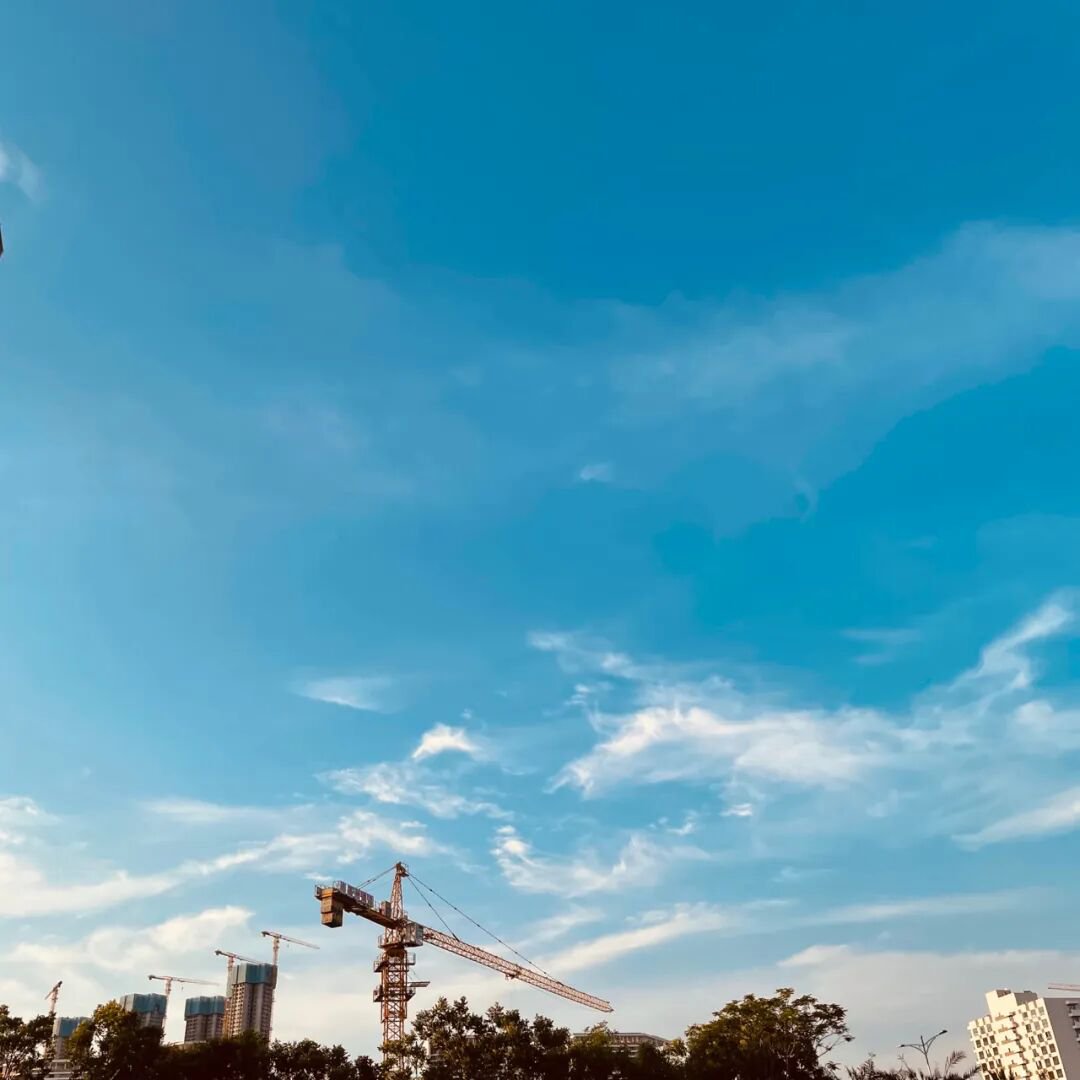 Photographed by the author in Shenzhen
References
-
Incomputable 37: A Vast Resemblance Links All Things: https://www.xiaoyuzhoufm.com/episode/6063b931c62ceb1d7cf29f42 ↩
重新认识世界(二)Analog & Digital
本文的选题主要来自于播客「不可理论」的《37: 茫茫相似将万物勾连》1
这一期节目我听了很多很多遍,极力推荐。
同为语词和符号,Anglog 和 Digital 的区分是不可忽略的。
「Anglog」 指的是「一个连续的变化到另一个连续的变化的映射」,是无限精确的、充满细节的、混乱有机的、流动感性的。
「Digital」就是「数位的,数字的」,它是指「以离散的、有限的方式去指代他物」,是明确定义的、无二义性的、决定论的、可计算的。
- Analog 是不同载体之间的同构迁移,而 Digital 则不属于任何载体。
- Analog 可以被无限细化和描述,而对 Digital 的描述是有限的。
- Analog 是非形式的,而 Digital 是形式的。
关于 Analog 和 Digital 的区分,试举几例:
声音
黑胶唱片和旧式广播电台是 Analog 的,而数字格式的音频文件是 Digital 的。
唱片的录制原理,是把空气中连续的声波刻录为密纹唱片的纹理。广播的原理也类似,声波被连续地转化为电磁波信号,而在接收端,电磁波信号也连续地还原为声波。
而数字格式的音频文件则与前者有质的不同,我们没有办法存储无限精细的声音,因为这需要无限的存储空间,所以必须做出取舍。
对于数字格式的音频文件,我们有比特深度(从最低的声音到最高的声音,我们能有多少种“音高”的可能性)和采样频率(单位时间内从连续信号中提取并组成离散信号的采样数),在两个最小音高之间的音高,以及在最小的时间间隔中声波的变化,就必须被舍弃掉(四舍五入掉),音频文件才能被保存在数字存储器里。
更多信息,请听播客「不在场」的《S2E1 MP3》。
计算机
世界上有两种计算机——模拟计算机(Analog Computer)数字计算机(Digital Computer)。
要计算1年后行星所处的位置,使用一个星盘来仿真行星的轨道,然后通过摇柄旋转星盘来“加速时间”,从而得到未来行星的位置,这就是 Analog 的思路。
在数字计算机发展早期,模拟计算机就已经用精密的齿轮组实现了微分和积分的计算,被用来预测月食、潮汐和制导防空武器。但模拟计算机无法编程,只能执行原始的设计意图,量产、小型化、商用化都非常困难,故而被很快被数字计算机所赶超。
当我们现在说起计算机的时候,说的都是数字计算机。但事情正在发生转机,神经网络的训练依赖于大量的矩阵乘法运算,使用传统的冯诺依曼架构(数字计算机)运行的效率较低,而使用模拟信号(0~1)代替数字信号(0或1)的模拟微电子器件(存算一体器件)的出现,可以在实现相同功能的前提下极大幅度地降低能耗。
更多信息,请看 Veritasium真理元素 的两期关于模拟计算机的视频:
语言
如果我问你「珠穆朗玛峰有多高」,如果你知道的话,你会告诉我它是8848米,或者更精确一些,8848.86米,但你没法也没必要告诉我一些别的东西,这是 Digital 的。
当如果我问你「珠穆朗玛峰是什么样的」,你会向我描述它是如何高耸入云,它是如何云雾缭绕,它是如何纯洁无瑕,它是如何屹立伟大。
我可以不断问你:「还有吗?然后呢?」而你似乎可以无限地回答下去,这是 Analog 的。
陈嘉映老师讲这个例子的时候没有提到 Analog 和 Digital 的区分,他在书里用这个例子讲「言说感知」和「言说理知」。私以为,陈老师在书中所讨论的「感知」和「理知」这一对概念,和 Analog & Digital 有很强的相似性。
更多信息,请阅读 陈嘉映:《感知·理知·自我认知》,北京:北京日报出版社,2022,第126页。
Analog 和 Digital 是一组隐秘而暧昧的对立关系。试图给 Analog 和 Digital 划分清晰的界限也是一个 Digital 的行为,所以对于 Analog 的思考者来说,Analog 和 Digital 是纠缠不清、相互依存的。Digitalization 的目的之一就是去仿真我们的真实世界,而 Analogy 也无法摆脱指称和量化的需要。
这一小节专门讲讲 Digital。
在《37: 茫茫相似将万物勾连》中,主播宝婷老师提到:
「Digital 起到的作用刚好就是人的手指头起到的作用」
稍加拓展,整理为以下五项作用:
计数、量化、计算
Digital 最基础的作用,不需要过多解释。
指(指涉 & 索引 & 指针,Index)
Digtial 和 Analog 最重要的区别之一在于,Digtial 对于他所指向的东西进行了简化和抽象。
我们用GDP和宽基指数(index)来指向两个大国的宏观经济情况,也用数字来指代战争和疫情中去世的每一个具体的人。用更可理解的、更少的数据量,来指代一个更加复杂、更加纠缠的事物,去除了冗余的细节,从而便于讨论分析,也容易找出混乱中的规律,这是 Digital 的特性和优势。
比较
数字天然蕴含了比较。
当我说一张试卷的成绩是85分的时候,这不是一个孤零零的85分,它必然和「比80分更高」、「比90分更低」联系在一起,也就是说,一个成绩的数字和整个用成绩去对人进行单一维度的评判的比较体系联系在一起。
当你在咖啡厅偶遇一个热爱世界、对未来充满期待和迷茫的年轻人,你不会用这样的一个体系去评判他,因为个性和灵气是「不可比较的」,是 Analog 而不是 Digital 的,但是一旦对人赋予一个「数值」,不论是 180 的身高、100w 的年薪、A+ 的成绩,都没有办法脱离这一抹「比较」的色彩。
当我们说「冰冷的数字」的时候,我们看似在寻求「客观」,实际上在寻求「比较」。
Digital 无法和功绩主义的意识形态相分离,万物都可被放置到秤上掂量的社会,绝不是一个理想的社会。
操纵和管理
综合以上种种,Digital 可以起到操纵和管理的作用。常有人说,我们现在是「被数字控制」的,这不仅仅意味着「我被什么东西控制,这个东西是数字」,而是说「正是因为数字的存在,我感到被控制了」。考试分数、绩效考评、数字化管理、电子档案、大数据杀熟、推荐算法.....数字世界构成了一套严整的体系,赋予了人类得以实现大规模协作的能力,亦让我们每一个人都感受到来自于这个体系的暴力。
无感的推理(图灵机)
Digital 也是科技爆发背后推动的引擎。科学革命最重要的契机并不是科学家对教廷的大胆异议,而是学术批判传统的建立和自然科学的数学化。
(一个小知识:日心说从希腊开始就有人不断提出,教会中也出现过日心说的支持者,哥白尼革命并不在于日心说的提出,科学革命的发生并没有教科书上描述的那么简单。)
为什么数学化如此重要?为什么只有在数学化之后,一门学科才有资格被称为「科学」?这是因为数学化提供了「无感的推理」的可能。哲学家(除了理性主义者和逻辑学家)的论证往往都很短,或许概念难以理解,或许思想晦涩深邃,但并不会出现「长线的推理」,不会有逻辑严整环环相扣的长证明。而这在数学物理学里则是常事,动辄几十页的理论证明论文比比皆是。
正是这个原因,希腊人推得出地球是圆的(通过对平面的理解,以及对地平线和月食的观察),推得出天体环形运动,却完全没有可能性像近现代的物理学家那样从公式里推出中子星、黑洞、测不准原理和量子涨落。数学是我们进行「长线精确推理」的唯一方式,让我们的视野探向认知所不及的微观和宏观宇宙。
如果要说有什么能力是独属于人类的,我不会回答「语言」或是「智能」,我会小心翼翼地回答说:
或许,Digital 的能力是人类具有而其他动物不具有的。
刘慈欣在小说《朝闻道》中描述了这一个故事:
在人类即将进行会毁灭宇宙的实验时,先进如神明的观察者文明(排险者)强行将人类叫停。排险者文明为了防止文明进行创世级别的实验毁灭宇宙,在宇宙中广泛设置了预警系统。科学家问排险者:「你们设置在地球的预警系统是什么时候报警的?牛顿时代?还是亚里士多德时代?」
排险者淡淡的回答道:「在更新世末期,距今27万年,一个原始人仰望星空的时间超越了预警阈值,对宇宙表现出了过分的好奇。如果说那个原始人对宇宙的几分钟凝视是看到了一颗宝石,其后你们所谓的整个人类文明,不过是弯腰去拾它罢了。」
我非常喜欢《朝闻道》这篇小说,刘慈欣创作它时,文笔还略显稚嫩,但这不妨碍这篇小说成为我心目中最好的中短篇科幻小说之一。「仰望星空」的浪漫是其他意象远不能及的,但我会觉得,从「原始人用手指计数」的那一刻开始警报开始作响更为符合现实。Digitalization 的出现,让人类这个河泥筑墙的弱小文明,在这苍茫宇宙的一个小石块上,仅仅凭借着观察、实验和纸笔,就能够洞悉宏大宇宙和微观世界的奥秘。
当然,Digital 也有坏的一面。正如上文所说的,Digitalization 并不是一个意识形态无涉的过程,相反,它意味着一种来自于标准化、现代化和规模化的暴力,一种结构性的、自上而下的对人的异化和宰制,而这正是 Analog 和人文精神所应该介入的空间。这个话题涉及到 Analog 和 Digital 张成的两个世界之间的摩擦,我们放到第 4 小节再谈。
Digital 不止是一把双刃剑,它更像是我们世界的一个维度(也就是下文中会提到的「数字界」),是人类现代世界的基石之一。
问题并不是「什么时候该用 Digital,什么时候不该用?」或者「如何去正确使用 Digital 以扬长避短?」。Digtial 并不是一个可以摆脱的事物或者一个可用可不用的工具,Digital是我们所经历的现实,抵抗它是徒劳的努力,我们应该思考的是如何与之共存、如何与之相处。
这一小节专门讲讲 Analog。
Digital 是极度理性的、喜好分门别类的,而 Analog 则正相反。所以在上一个段落中,我可以细细地将 Digital 分门别类,赋予定义和诠释,完完全全通过我的理性叙述来讲什么是 Digital。但相同的解释方式,无法用在 Analog 上。
啊,我该如何向你描述 Analog?
这是诗人笔下的世界,是感受力的世界,是弥散着咖啡香气的世界。
Analog 是文学的,有文学的逻辑,基于隐喻和感受的逻辑,这并不依赖 Digital 的逻辑。我看到别人不开心,便思考是不是自己冒犯到了对方,这是基于逻辑的推理,和 Digital 的严整逻辑没有关系。
我们能够从不相关的事物之中找到隐秘的联系和共鸣,能够细细地去体会一种质感、一种心情、一个情景、一段体验、一叶秋天、一粒阳光,这就是 Analog 。言辞和感受并不是可以分开的东西,言语里带着我们私人的感受和体会,而感受和体会的表达则必须经由言语。
从最广泛的意义上来讲,「世界」就是 Analog 的,因为我们对于周围世界的全部感受,就是「一个连续的变化(内外部世界)到另一个连续的变化(内心中感受)的映射」。
所以,正如 Digital 一样,Analog 也是世界的一个维度,统一是我们所经历的现实。
于是,我们可以基于 Analog vs Digital,对象征界进行二分:笔者称之为「感受与言辞界」和「数字界」。
「象征界对实在界的僭越,实在界的幽灵撕裂象征界。」这一实在界与象征界的纠缠是旧时代社会中破坏性力量的源泉。但这一「想象界-象征界-实在界」的框架并不能包容信息时代的人类世界,后人文主义和后人类主义的理论视野必须被容纳。
信息时代的人类面对第二重世界的纠缠,体现为「数字界对感受与言辞界的僭越,感受与言辞界的幽灵撕裂数字界。」
「感受与言辞界」是基于隐喻的,对真实世界的体会被抽象成符号和语词,通过语言,读者基于自己的经验去「体验」他者语言指向的经验,于是这个世界是千人千面的、流动的、不定的。
「数字界」消除了这种流动性和不定性。数字的世界是基于形式系统的,二进制的存储是离散的、有限精度的,所以它意味着量化、仿真、操纵和管理。无限精确、细节完备的实在界和流光溢彩、完全主观的感受与言辞界,都是没有办法被量化和运算的。
……在那个帝国里,绘制地图的技巧已臻完美:一张省图大及一座城池,而帝国全图则可覆盖一个省份。
随着时间的流逝,人们对那些巨幅地图不再满意,于是各地图学会就绘制出了一幅跟帝国的疆土一般大小并完全切合的地图。
对地图学并不那么热衷的后人发觉那么大的地图没有用处,所以不无残忍地让那地图任由日晒雨淋。
西部沙漠至今还保留有那已经变成野兽和乞丐巢穴的地图残片,那是在全国唯一可以见到的“地图绘制法”的遗迹。
(全文)
—— 博尔赫斯《科学的严谨》
数字界是一张「地图」,世界上有一座山,到了地图上,变成一个三角形符号或是一个等高线图,旁边写上一个数字来标出高度。请读者注意,这里的符号化重点并不在于「符号对实物的指代」(这是象征界对实在界的僭越),而是这个数字化的过程,它将真实世界里的山峰变成了一个可量化的,可计算的东西。再细致的地图,比起真实世界的地形仍然是高度模糊失真的,但正因此,数字化才得以给万物以尺度,从而,这个数字的世界可量化、可衡量、可建模、可计算。
数字界并不是一个信息时代才被创造出来的世界,它的历史可以追溯到人类最早开始用数字丈量世界的尺度的那一瞬间。
真正的系统、现实的系统,就是我们当前的系统观,也就是理性自身。如果把整个工厂拆毁了,而架构它的理性仍然存在,那么靠着这个理性很容易就可以建造另一座工厂。如果革命能够摧毁一个政府,但是政府背后的理性仍然完整地保存着,那么很快又可以建立同样的政府。我们谈论了这么多有关系统的事,然而对系统了解得仍然不够。
钢铁本身并不比我的发动机上这一撮尘土有更多形状,形状完全是头脑的产物。这一点很重要。钢铁?甚至钢铁本身也是人造的,因为在自然界之中并没有钢铁的存在,在远古的铜器时代,就有人能告诉你这个。自然界所有的,只是可以做钢铁的原料。但什么又是原料呢?同样,这也是人想出来的……鬼魂!
—— 波西格《禅与摩托车维修艺术》
数字界和象征界很相似,但是数字界不容许二义性,数字界是「形式的」。
「形式的」的意思是说一个东西不依赖于它的载体——事物的性质是由某种数量关系决定的,万物按照一定的数量比例而构成和谐的秩序,但事物所基于的物质载体却是无所谓的。
电子游戏用计算机图形学绘制出山川草木,我们在屏幕上看到的是渲染之后的二维图像,而全部的模型实体(物质)和实体之间的关系和交互(物理)都以数据的形式被保存记录。
如果模型实体的精度达到极致,那便和真实世界的物质无异,把实体之间的关系和交互的精度做到极致,那物质就被赋予了和真实世界无异的物理规则。计算机程序的实质是一段数据、一串数字。计算机程序是「形式的」,不论用的是晶体管还是电子管,抽象的程序都是一致的,都可以运行。
工业界有「数字孪生」的概念,数字孪生在虚拟空间中完成对实物所有参数指标的复刻,从而反映相对应的实体装备的全生命周期过程。数字孪生不仅是一个模型或仿真,数字孪生就是实物本身。他们所依赖的物质和载体不同,但从形式的角度来看,物质元素和矩阵数据并无真假之分别,实物不比数字孪生更真,数字孪生也不比实物更假。
未来世界的降临远比你想象的要更早,智能手机早已不仅是人类的一个「工具」,而在逐渐成为人类的一个「器官」。在科幻想象中,人类的大脑能接上外部存储,从而增加人类的记忆力。
而事实上,这一愿望早已被部分地实现了,对于那些习惯于随手记录的人来说,手机已经成为了大脑的外部硬盘。即时通讯和社交媒体僭越了传统的人际关系和交流方式,当你在路上看到戴着蓝牙耳机和远方朋友通话的人的时候,你一定会体会到未来将至的张力。
在后疫情时代,虚拟世界和现实世界的分野变得模糊,在封禁期间,网络空间中的生活比现实生活更加真实。
在这个意义上,赛博格(Cyborg,人类与电子机械的融合系统)不是我们将要成为的,而是我们已经成为的。
在数学、自然科学、工厂和程序中,Digital 是自然的、无害的、正确的。数字界对象征界的僭越并不发生在这里,因为在这些情景下,符号象征本就是形式化的(电子就是电子,不存在被误解的空间),数字界和象征界是全同的,自然不存在割裂。
「数字界」的问题在于,在这一严整的图景中,没有地方容纳我们的欢愉和痛苦,容纳我们的道德追求和艺术理想。
上面的这段话并不是我的原创,而是陈嘉映老师对「科学世界」的批评,这个批评对「数字界」同样适用。「数字界」比「科学所描画出来的世界」更大,科学的世界离我们的日常生活很远,但数字界已经是我们日常生活的一部分了。
数字化在意不同事物之间的普遍结构和规律,二分性质和层级结构,注重分析。
当这一思路切进人类复杂的心理状态和情绪体验,切进对良好社会和公良政治的想象,切进文学、哲学与梦想,对人的第二重异化和扭曲就会发生。
宝婷老师在《37: 茫茫相似将万物勾连》中提到了一个词:
「数字奇点(Digital Singularity)」
「数字奇点」是世界上的一切都可以被量化和数字化的那一瞬间,是信息技术无处不在,和我们的生活融为一体的那个瞬间。
在那个时候,「数字界」的疆域会覆盖整个人类世界,没有任何事物是不能被 Digitalize 的。
数字奇点的降临比你想象的要更早。
你是否还记得上次使用人民币现金是什么时候?
我已经记不清了,上次在自己的零钱袋里翻出来硬币的时候,我感到无比陌生,现金不知从什么时候开始在中国已经变成了一个怀旧的东西、一个带着些许异域风情的东西。
疫情前还可以出国旅行的时候,总是喜欢带一些花费不掉的异国货币作为旅行的纪念,而现在人民币也变成了类似的事物——我觉得它好看,我喜欢带一点点在身上,但我却不知道如何去使用它,如何去用它消费。
走进超市放眼都是一些 xx.99 元的商品,要是用现金的话,柜员怎么给我找零呢?我不知道,但一想象这个画面,我就觉得滑稽想笑,现金似乎确实是上一个时代的东西了。
之前在豆瓣上看到过一个笑话:贴主去便利店买雪糕,正好身上带着现金,想趁这个机会用掉,问老板说:「老板,你这里收纸钱吗?」老板当场愣住,她这才突然反应过来:「啊,我的意思是现金,收现金吗?」
就连「现金」这个词都变得如此陌生了。现在的孩子看到软盘(或许你也不知道什么是软盘,诺,就是这个:💾)会好奇地问:「叔叔阿姨,请问这个是『保存键』的实体模型吗?」
说不定以后的孩子看到现金,也会问:「叔叔阿姨,这个东西是不是『实体钱』 ?」
这一切的发生都在短短 20 年之间:
2004年,支付宝脱离淘宝,成为第三方支付平台。
2013年,微信支付才横空出世。
最开始是电商平台要使用电子支付,接着超市和便利店也开始普及移动支付,到了现在,街边卖烤肠的小摊贩也需要在烤箱上贴一个支付码,不然很多顾客会不知道怎么支付。
支付方式的「数字奇点」已经发生。
其他领域的「数字奇点」还会远吗?
按照道理来说,一篇公众号文章写到这里,是时候端出来一些「上价值」的东西给读者。
这让我想到了餐厅吃饭时最后的甜品果盘,一个服务员走过来说:「上价值喽~」然后食客谈笑寒暄一会,有个人离开座位结账,最后大家一起高兴离开。
很抱歉,在这篇文章里,在《重新认识世界》的结尾,我没有办法给你这一盘「价值」。
Analog & Digital,「数字界」和「象征与感受界」,太多好的坏的东西缠绕在一起,文中我尽自己所能为你梳理清楚、条分缕析,但一回头看这两篇文章,还是感觉自己写得很乱很绕。剪不断,理还乱。
那么,有什么是我们可以做的呢?
或者说,在思索过这一切之后,我们应如何和这个世界相处,如何和自己相处?
这是一个开放问题,我没有资格给你任何确定的答案。
但我可以给你讲我最近突然养成的一个新的爱好——观云看天。
一般来说,晴天是无趣的,甚至有点过于媚俗的,蓝色的天空,漂浮的白云,泼洒的阳光,初看一眼相当可爱,见得多了也就显得普通。
但即使是空空的蓝天,我似乎也慢慢学会了在其中找到乐趣。天空不一定是蓝色的,它也可以是其他的颜色。即使同为蓝色,每一天也可以是不一样的蓝色,它的颜色每一小时都会发生变化。
从空落落的会议室看窗外的天空是一个样子,从透亮亮的玻璃幕墙看天空又是另一种样子。
即使是脏玻璃和雾蒙蒙的眼镜,也会给天空带上一层不一样的滤镜。
还可以观察地面。深圳的纬度很低,偶尔在午时,可以看到阳光直直地往下打,行人和建筑的影子小小的落在脚下,于是周围的世界有产生了一丝丝不真实感。
还可以看看建筑。离开了学校,视野所及的建筑当然无一出自大建筑师的手笔,但光线打在混凝土墙面和玻璃窗上的质感,这种 texture,却是会随着自己脚步的移动和时间的推移而变化,移步换景,很是好看,可惜手机相机完全拍不出来。
在电影院看电影和在笔记本上看电影是不一样的,看线下展览和看艺术品照片是不一样的,微信聊天和咖啡厅聊天是不一样的,听现场音乐会和戴着耳机听无损音频是不一样的。
请抓住生活,体会它,别让它溜走。
(全文完)
笔者摄于深圳
参考资料
-
「不可理论」37:茫茫相似将万物勾连 : https://www.xiaoyuzhoufm.com/episode/6063b931c62ceb1d7cf29f42 ↩