What Made Me Fall in Love with Architecture
"My interests are wide. Literally wide. If you love anything at all, come find me and let's talk about it."
That's how I introduce myself every time. And every time, the words feel hollow, weightless, a little too lazy. They're missing the heat in my blood, the sincerity and passion I feel for the things I actually love.
The new semester has rolled around, and it suddenly hit me that I have a public account where I can do whatever I want and say whatever I please. So why not unpack "wide interests" a little, and treat it as a way to start the conversation.
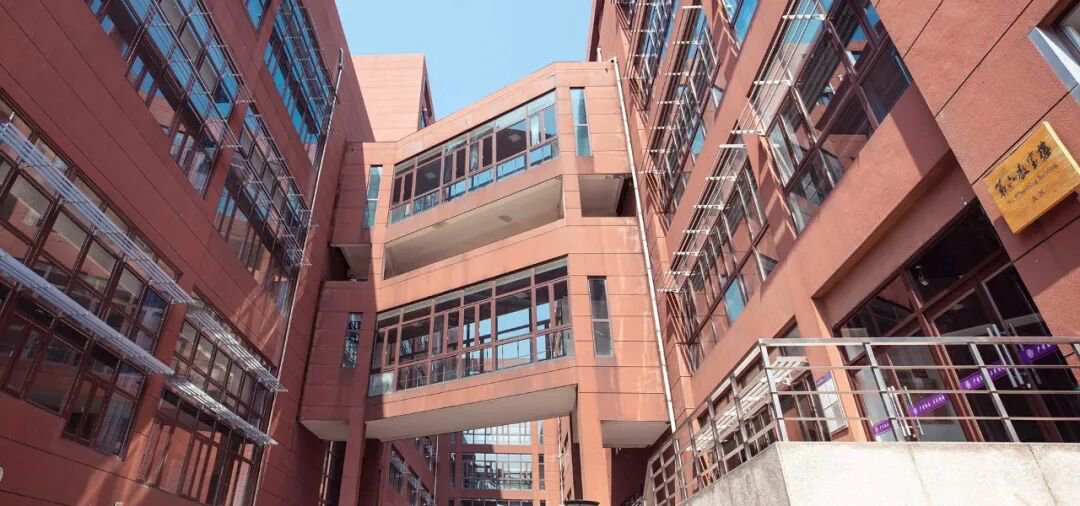 Tsinghua University, Sixth Teaching Building
The first piece in this series is about why architecture fascinates me.
Even friends who know me well might not realize that "fanatical architecture lover" is part of how I see myself. I've wanted to write What Made Me Fall in Love with Architecture for a long time. Now, stealing a moment from a busy stretch, I'm finally putting down a few lines. Call it settling an old debt.
What I love is not only the tall buildings, the theaters and the gardens. It's also the parks, the plazas, all the places we don't usually file under "architecture." And it isn't only the polish or the grandeur of how a thing looks. I care about how the space is laid out, about the mood of the whole. To put it in bookish terms, the "architecture" I love is the sum of every private and public space that human will has shaped. It's like the air. We live inside it every single day, and yet we never stop to think about how it shapes our daily lives and the way we think.
The first time I really started thinking about buildings, it was because a strange question leapt into my head. The houses people lived in long ago are nothing like the ones we live in now. So where did this thing we call modern architecture come from? Who first dreamed up the idea that houses could be built this way? At first I had no answer, but I had a faint sense of something: that there was a group of people, an era, a current of thought, and together they changed the entire world, making this world of manmade things look the way it does now instead of some other way.
Thanks to the internet, I found my answer soon enough. Bauhaus. The origin point of modern design, the line drawn cleanly between "pre-modern" and "modern," one crucial piece of the ultimate question that had puzzled me for years, "what does modern even mean?" The architecture piece of that puzzle.
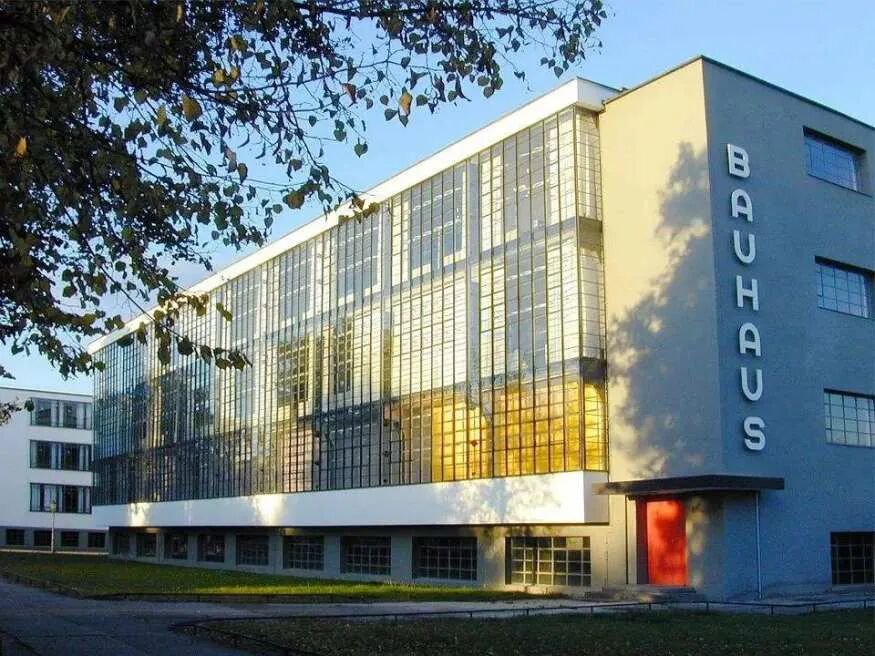 The Bauhaus building in Dessau
Slowly I also came to understand that Bauhaus was probably not historically inevitable. In the same period it had rivals, like Art Deco. There was another way for "modern" to look. It's just that Bauhaus happened to be the idea that won, and it swept across the whole world with a conqueror's swagger. Over a long stretch of time, Bauhaus drifted from a functionalism where "form serves function" into a minimalism where "form matters more than content." It grew duller, more monotonous, more estranged from tradition, more concerned with surface than substance.
And so we get to watch Art Deco stage its comeback. A good deal of today's avant-garde architectural taste shares a temperament with Art Deco. It's invention and nostalgia at once, taking in everything, carrying a faint flavor of old China or of the Arab world, respecting tradition while staying fresh and alive.
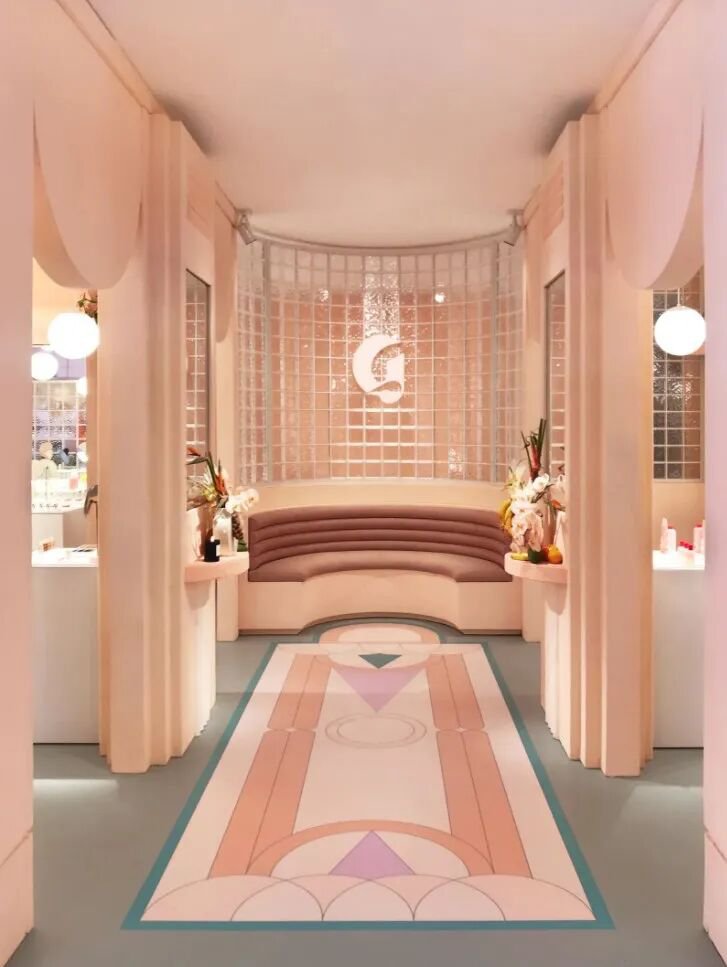 ©Glossier
Bauhaus has been explained on the internet more times than anyone can count, so there's no need for me to say much more, and bringing up Art Deco was really just a passing whim. What I want to say here is this: the history of how buildings change is of course part of the history of ideas. Human notions create buildings, and buildings in turn shape human notions. For years I've doubted whether Hegel's "world spirit" is real, doubted whether there's any such thing as a "spirit of the age." But the way buildings exist and shift looks so much like the outward face of some spirit. A building is like the silhouette of a spirit. Buildings in different places reveal the temperament of those places, and old buildings are living fossils of how people once thought.
There's a phrase I love: "the imagination of [some field]." I first ran into it in the book The Sociological Imagination. So let me borrow it, simplify it a little, and talk about "the architectural imagination."
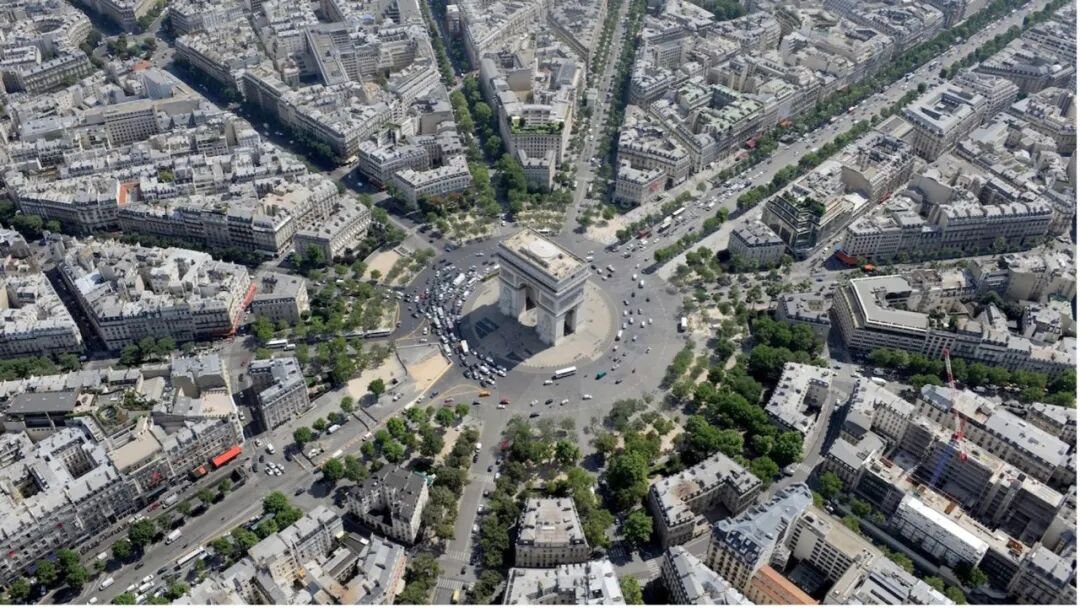 The Place de l'Étoile and the Arc de Triomphe after Haussmann's renovation
When you look at an aerial photo of Paris, do you feel a kind of violence, a violence that drives out everything unclean and chaotic, that forces everything into rigid order?
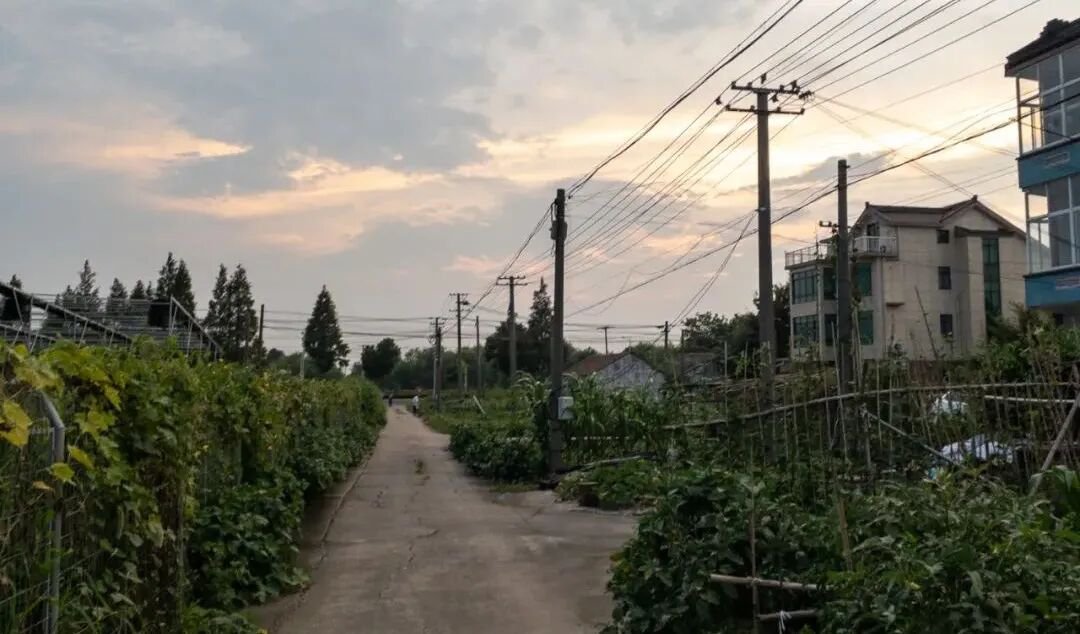 Jinshan District, Shanghai
When you drive through the outskirts of Shanghai, do you feel the countryside waiting for modernity to arrive while also fearing the loss of its old customs and character, and the small, tangled feeling of hope and worry that grows from it?
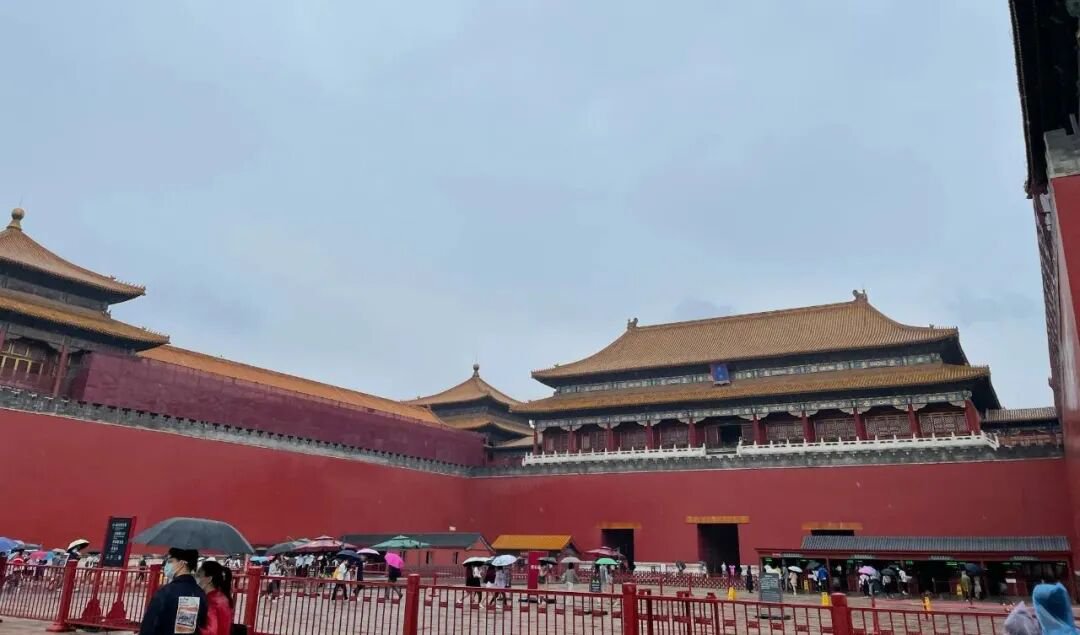 The Forbidden City
Looking at the grid of a Beijing map, do you see the old capital's rigidly stratified imperial ideology, and do you feel the ancient palace city resisting the encroachment of commerce and capitalism, struggling to hold on to its dignity and its place on the map of twenty-first-century China?
…………
I could give plenty of examples. Every city has its own temperament and its own moods, but the reading is necessarily subjective. There's no answer key. How you feel a city blends together with your own mind, and so a thousand people see a thousand cities. I don't need to say much more. I'll leave the tasting to the reader.
Let me say it once more: an excessive sensitivity to things (acumen) is a luxury. Let your mind roam freely through buildings and spaces, and everything around you turns vivid and felt. That is the "architectural imagination," or you could call it the "architectural sensibility."
I love the Tsinghua campus. To me it's a living palace of art, gathering countless great buildings and great public spaces that make you gasp. Even better, these buildings aren't cold exhibits behind glass. As a student I get to interact with them, which carries a little of the feeling in that old line, "we look at each other, never tiring, only Jingting Mountain and I."
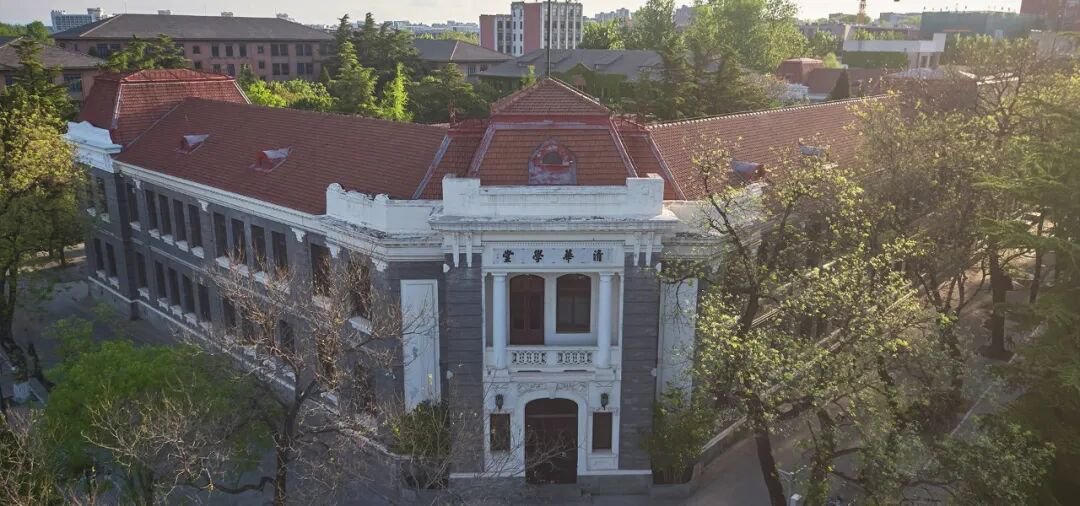 Tsinghua Xuetang
It's hard to describe what I felt the first time I went to study at Tsinghua Xuetang. For me it was nothing short of a pilgrimage. Carrying my books, I walked the corridors of Tsinghua Xuetang, taking in the flow of its space, the stairs and the railings, the desks and chairs and shelves. Reading is a conversation between reader and author. Walking through a building, then, is to be one small person in conversation with the spirit of an age. If a student treated this place as nothing more than an old house to sit and study in, that really would be a pity. But it's also fine, because the way a building works on a person should be gentle and gradual, like spring rain soaking into the soil. Even my standing here with this elaborate, bookish set of phrases is enough to disturb that "tacit" mood, and I deserve the scolding. Inside an architectural space, words are of course superfluous and pale.
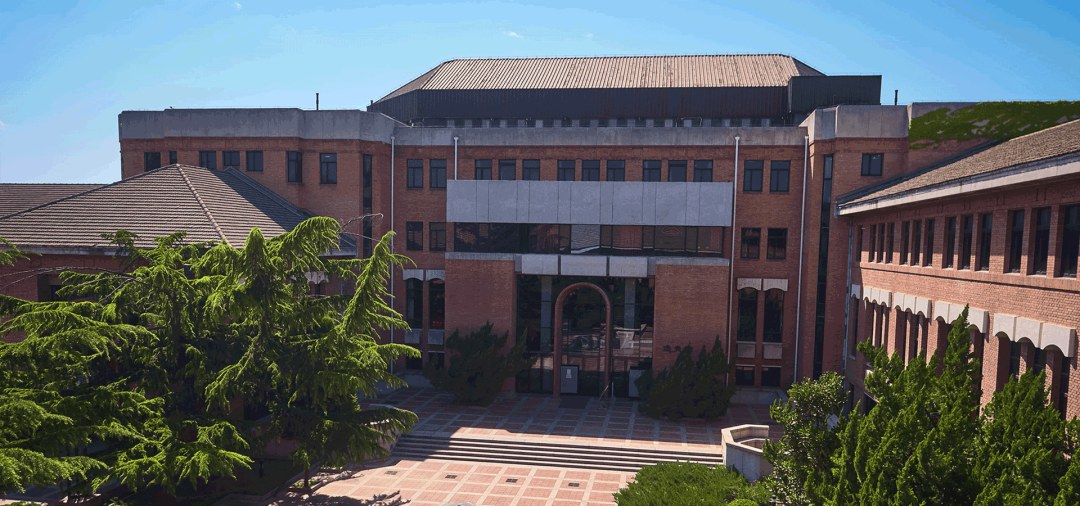 Tsinghua Library
Another impression that stayed with me came from visiting the Tsinghua Library. In front of the scale model I paced back and forth, looking for a long time, until I was the only person left standing there studying it, and only then did I reluctantly move on to the next spot. I couldn't help marveling to myself: "The Tsinghua Library carries on the concrete, brutalist style of our old Soviet brother, fused with the garden sensibility and color palette of classical Chinese architecture, while keeping the restraint and seriousness of a great university. The library is the heart of a university, and the Tsinghua Library is full of ingenuity yet never showy, full of innovation yet deeply restrained. And so Tsinghua's scholarly spirit, one of action over words and openness to innovation, can be glimpsed in a single library."
So a life of study, even when you're racing on your bike to make it to class, is also appreciating art, taking part in art, dissolving yourself into art.
I love buildings, I love architecture, so let me wander this world a little more and look a little longer.
The more I know, the more I find I don't know, and the more beautiful the world becomes.
And a wish for you: may your autumn days be lovely.
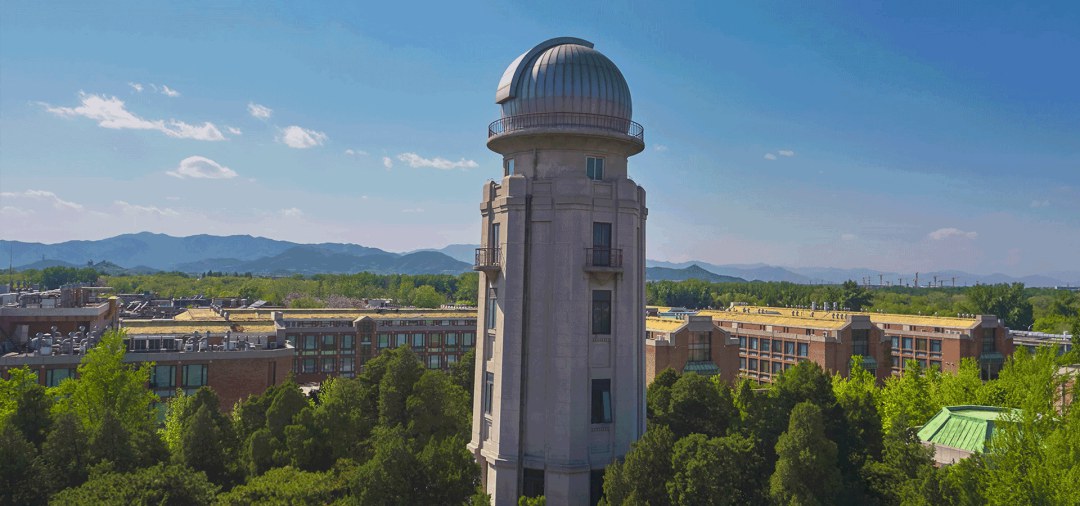 Tsinghua Meteorological Observatory
I'm Ninganjinghai. Thank you for reading to the end.
References:
The Public Space of Great Cities and Its Rebellious Power by Dune Research Institute
Art Deco: Another Attitude Toward Design by Zhengyi Youth
Invisible Cities by Italo Calvino
Image sources:
Paradox Forum
是什么让我爱上建筑学
“我兴趣广泛,字面意思上的广泛,有任何的喜欢的东西都欢迎来找我聊聊。”
我每次自我介绍都会这样说。但每次这样介绍完自己,都会觉得这些话空落落、轻飘飘、太敷衍,少了那种洋溢的热血沸腾,以及对热爱之物的赤诚与激情。
开学到现在,突然想起我还有一个公众号可以为所欲为、畅所欲言,不如就把“兴趣广泛”展开说道说道,权当抛砖引玉。
清华大学第六教学楼
这个系列的第一篇文章,就来说说我为什么对建筑学着迷。
可能熟悉我的朋友也不太知道,我还有建筑学狂热爱好者这份自我认同。《是什么让我爱上建筑学》这篇文章我已经想写很久了,现在忙里偷闲地来写上几笔,算是个交代。
我喜欢的并不仅仅是高楼大厦、剧院园林,也包括公园、广场等一般不称为“建筑”的地方,我喜欢的也不仅仅是外观上的精致或大气,也在乎空间的布局和整体的氛围。用书呆子似的话说,我所热爱的“建筑学”是由人的意志塑造的一切私人或公共空间的总称。它就像是空气,我们每天都生活在其中,却不会去反思建筑对我们的日常生活以及思维模式的影响。
我最早开始反思建筑,是因为一个奇怪的问题突然跃进我的脑海:古人所居住的房子和我们现在可以说是完全不一样的,所谓的现代建筑从何而来呢?是谁最早想出来可以这样造房子的?我一开始并不知道这个问题的答案,但我隐隐约约意识到,有一群人、一个时代、一种思潮,他们改变了整个世界,使得这个充斥着人造物的世界成为现在的这个样子而不是别的样子。
托互联网的福,我很快就知道答案了——包豪斯主义,现代设计的原点,给“前现代”和“现代”划出了一条泾渭分明的界限,是困惑我多年的终极问题:“何谓现代?”的一块重要拼图——建筑学的拼图。
包豪斯德绍校舍
我后来也慢慢地知道,包豪斯主义或许并不是历史的必然。同时期还有诸如装饰艺术风格(Art Deco)等等与之竞争,“现代”也有另一种表现形式,只是包豪斯恰好作为胜出的理念,以征服者的姿态席卷了整个世界。经过了漫长时间的发展,包豪斯渐渐从“形式服务于功能”的功能主义建筑滑向“形式重于内容”的极简主义,越来越单调无聊,疏离传统,流于形式。
于是可以见证 Art Deco 装饰风格的复辟,当下的不少前卫建筑审美和 Art Deco 颇有气质上的相通,是创新也是怀旧,兼收并蓄,带着些古中国或者阿拉伯式的情调,尊重传统同时新潮而有活力。
©Glossier
包豪斯这个东西在当今的互联网上已经被解释无数次了,我没必要在这里多说些什么,聊起 Art Deco 也不过是一时兴起。我在这里想说的是,建筑演变的历史当然也是思想史的一部分,人的观念创造出建筑,建筑也反过来影响人的观念。这么多年来,我一直怀疑黑格尔所言的“世界精神”是不是真的,也怀疑到底有存不存在所谓的“时代精神”,但建筑的存在与流变像极了某种精神的外显,建筑像是精神的轮廓,不同地方的建筑显出不同地方的气质,而古建筑是思维模式的活化石。
我很喜欢这样一种表达:“XX学的想象力”,我最早见于《社会学的想象力》一书。于是简单化用一下,来谈谈“建筑学的想象力”。
大改造后的星形广场与凯旋门
当看到巴黎的航拍图片的时候,你有没有感受一种把所有不干净和混乱的东西驱逐出去的暴力,一种把一切强行安放地井井有条的暴力?
上海市金山区
当开车经过上海市的市郊,有没有感受到农村期待着现代化到来,但又害怕丢了原来的民风和气质,于是生发的那种参杂着期待与担忧的小情绪?
故宫
看到网格状的北京地图,有没有看到古都旧日阶级分明的帝制意识形态,又有没有感受到古代皇城对抗着商业和资本主义的侵占,艰难地试着在21世纪的中国地图上维持住自己的威严和地位?
…………
我可以说很多例子,每一座城市都有着自己的气质和情绪,但它必然是主观的,没有标准答案,对城市的感受和欣赏城市的人自己的思想融贯在一起,千人千面。笔者不必多说,交由读者自行品鉴。
再次重申,对于事物的过分敏感(Acumen)是一件奢侈品,任自己的心理驰骋在建筑和空间里,四周的一切便生动可感,这便是“建筑学的想象力”,或者说“建筑学的感受力”。
我很喜欢清华园,这里对我来说是活生生的艺术殿堂,汇集了无数令人惊叫赞叹的伟大建筑和伟大的公共空间。更棒的是,这些建筑不是冷冰冰的展览品,我能够以一个学生的身份与之互动,颇有“相看两不厌,只有敬亭山”的意味。
清华学堂
我很难向你描述我第一次去清华学堂自习的感受,这对我而言不亚于一次朝圣,我揣着书本走在清华学堂的走廊,体会它的空间走向、楼梯栏杆、桌椅书架。读书是读者与作者的交流,那么走在建筑里,就是作为一个渺小的人,在和一个时代的精神交流。如果一位学子只把这儿当成了一个可以坐下来自习的老房子,那真是可惜呀。但,也没关系,因为建筑之于人的影响就该是春风化雨、潜移默化的,我在这里拿着一套文绉绉的话术来大说特说,也会打搅那“默会”的气氛,该受批评,建筑空间里,言语当然是多余而又苍白的。
清华图书馆
另一次印象极深的体会,是参观清华图书馆的时候,在微缩模型面前,我来回徘徊观赏了许久,直到模型的旁边只剩下我一个人还在端详,我方才不舍地走去下一个地点。我当时不由心生慨叹:“清华图书馆沿袭了苏联老大哥粗野主义的混凝土建筑风格,结合了古代中国建筑的园林情调和配色气质,也不失大学府的内敛和严肃。图书馆是大学的心脏,清华大学图书馆具匠心却不张扬,富创新却极克制。故而,清华行胜于言、包容创新的学术氛围,从一座图书馆就可见一斑。”
于是,读书生活,哪怕是骑着赶着上课,也是欣赏艺术,参与艺术,把自己融入到艺术里。
我喜欢建筑,喜欢建筑学,让我在这世间多走走多看看吧。
知之愈多,无知愈多,世界愈美。
另祝,秋日佳祺。
清华气象台
我是宁宁宁静海,感谢你看完我的文章
参考资料:
《伟大城市的公共空间及其反叛力量》by 沙丘研究所
《Art Deco:设计的另一种态度》by 正艺青年
《看不见的城市》by 伊塔洛·卡尔维诺
图像来源:
Paradox Forum