Trying to Become a "Bored" Person
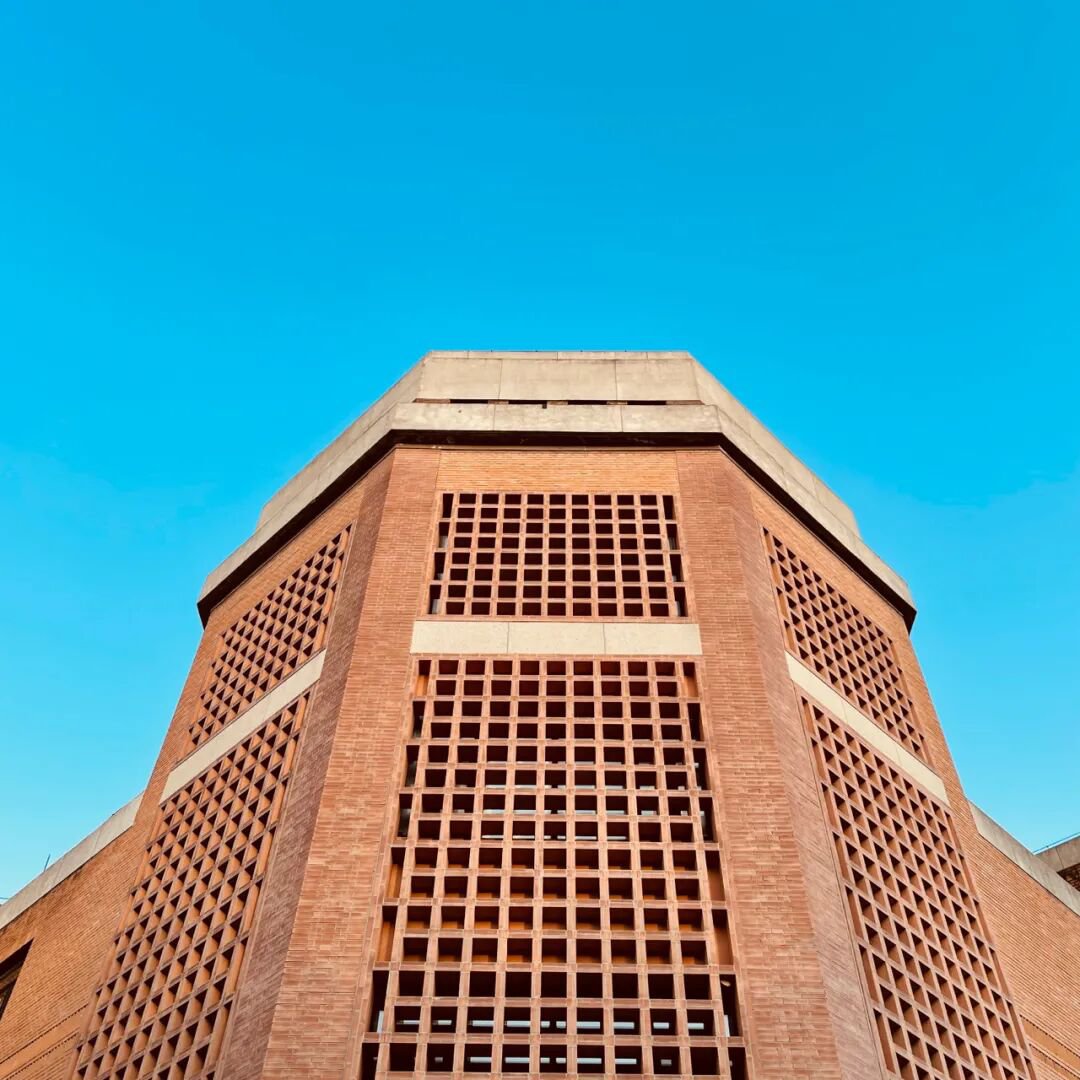 Taken by the author in Beijing
If, while walking, a person grows bored and cannot bear the boredom, they will pace around in a fretful, irritated way, casting about anxiously for something, anything, to do.
Someone with more patience for boredom, on the other hand, will, after enduring it for a moment, come to realize that perhaps it is this particular way of walking that bores them. And that realization moves them to invent a new way of walking.
Running is not a new way of walking; it is just walking sped up. Dancing, or drifting, is a genuinely new kind of motion. Only humans can dance.
Perhaps, while walking, the person tastes a deep boredom, and out of that boredom they turn their footsteps into dance.
That passage comes from the philosopher Byung-Chul Han, in The Burnout Society.
Han's writing has a heaviness to it, a real density. The slim little book reads like a compressed biscuit for the mind, the kind you can chew on over and over without ever getting tired of it.
And it is wonderfully readable, none of the dryness you brace yourself for in a thick philosophy tome. Even when you do not quite recognize the examples Han reaches for, you can still grasp roughly what he is trying to say.
Let me use The Burnout Society as a way in. Today I want to talk, a little, about boredom.
Humanity's achievements in the realm of culture, philosophical thought included, all owe themselves to our capacity for deep, single-minded attention. Culture can only arise in conditions that allow for this depth of attention.
And yet that deep attention is being pushed further and further to the margins, giving way to another kind of attention: hyperattention (Hyperaufmerksamkeit). This scattered attention shows up as a constant shifting of focus among many tasks, sources of information, and processes at once. Because it cannot tolerate even a trace of boredom, it can never make room for a deep boredom, and it is precisely that deep boredom that matters so much to the act of creation.
Walter Benjamin called this deep boredom "the dream bird that hatches the egg of experience." If sleep is the highest form of physical relaxation, then deep boredom is the ultimate state of spiritual relaxation. Sheer busyness produces nothing new. It only repeats or accelerates what already exists.
Benjamin lamented that the nest of the dream bird, woven out of rest and time, is vanishing in modern society. There is no more "weaving and netting." Boredom is "a warm grey cloth lined on the inside with the most lustrous and colorful of silks," and "in this cloth we wrap ourselves when we dream." We settle into "the arabesques of its lining," and there we feel at home, at ease.
Without relaxation and rest, we lose "the gift of listening," and the "community of listeners" ceases to exist. Such a community stands in direct opposition to our hyperactive society. The gift of listening rests precisely on a contemplative attentiveness (Aufmerksamkeit), a region the hyperactive subject can never reach.
As Han tells it, in a society that worships achievement we are like runners circling an endless track.
No one holds a whip over us, no one forces us to chase a better time. We run toward an ideal self of our own making. "The self becomes trapped inside an ideal self it can never reach, and so grows steadily more dejected and worn out. Out of the gap between the real self and the ideal self, a kind of self-aggression is born."
Burnout is like stopping mid-run, gasping, because the exhaustion has become unbearable. It is a rigidity brought on by too much self-exploitation, and its aim is not to end the state of frantic overactivity but to return to it.
For the person living inside the achievement society, working out, resting, having fun, all of it is in service of getting back to "health." Just as Nietzsche's last man makes health his new god, they will spend anything to keep themselves healthy and active.
But the core of all that health and activity turns out to be hollow. Being active and healthy is held up as the purpose of life, the thing we strive toward, and yet this so-called purpose points only back at life itself, forming a closed, self-referential loop. Being active and healthy means nothing more than keeping life going; it points to no end beyond itself.
This circular structure quietly usurps the place where a good life and a sense of meaning should be. And so "his life is like that of the undead. He is too active to die, and too lifeless to live."
Boredom is different. Boredom is non-teleological. It is like a reading-comprehension question with no correct answer in the back of the book, an opening of the heart, genuinely, to everything new. That is why it holds room for every future that might still come.
So deep boredom is exactly where creativity comes from. It is the soul of anything new.
The other day, reading Weichen's newsletter 「生活奇旅」(Strange Journeys of a Life), I came across a passage that stayed with me:
I stopped pushing myself to exercise for the sake of some future health. I just enjoyed the moving itself, and somehow it became a habit.
I stopped treating meditation as a tool for easing my anxiety. I just felt the experience of it, and somehow it changed me deeply.
I stopped resolving that this year I really had to read more. I just read whatever I was curious about, and somehow I read more.
I stopped worrying about whether my career was running faster than everyone else's, and somehow I slowly found out what I actually love to do.
What that passage describes is exactly the path of an overly active person who, after a moment of self-awareness, decides to slow down, to go for a walk, to pay attention inside the boredom to the small joys and sensations of each passing minute, and who, in doing so, comes away with an inner fullness and a sudden spark of inspiration and creativity.
Anything we call "relaxation" can, by the same logic, be sorted roughly into two kinds: the burnout kind and the boredom kind.
Take a walk, for example.
The burnout walk goes like this.
There is a deadline tonight and a presentation tomorrow morning. My heart is restless and I have no frame of mind to do any of it properly, so I pat myself on the head with both hands and say, "This can't go on. I have to fix my mood, that's the only way I'll get through what I have to do. Quick, go outside, take a walk, and come back in half an hour ready to actually work."
At that point the walk has become nothing more than a way of tidying myself up for something else, a process of turning myself back into a standard-issue cog for studying, socializing, and research. What I am looking forward to is not the walk itself but the result of the walk, the treatment that will cure me back into an active, healthy state.
A walk taken as that kind of rest is a burnout walk. It is a paralysis and shock to the self's own functioning, a stimulant-and-sleeping-pill way of regimenting myself, and it never breaks free of the achievement society's discipline or its loop of self-exploitation.
The boredom walk goes like this.
Maybe I am busy, maybe I am not, but I do not treat the walk as a means of smoothing myself over. I take it for the sake of the walking, as a long-awaited, delightful little journey of the soul.
Out on the road my thoughts run loose, aimless, completely free, and so I might notice all sorts of things I had never paid attention to before. Maybe the clouds at the edge of the sky are unusually beautiful, or maybe I stumble onto some quiet corner of campus I never knew was there.
My mind is open and free too. Maybe a point from a lecture suddenly clicks into place, maybe a research idea comes out of nowhere, or maybe nothing comes to me at all, and that is perfectly fine, because I have come away with enormous joy and ease, and recovered the energy to start working again.
Which kind of walk would you choose?
For a while, I noticed I had lost interest in things I once loved beyond measure.
Books, games, anime, films. I had a "list of masterpieces" that kept getting longer, all of them works I genuinely longed for, born from the hands of legendary creators, some carrying a metaphor or a dissection of social reality, some bursting with a wildly distinctive artistic style, some holding a depth of thought worth chewing over again and again.
I knew that any single one of them stood a real chance of changing how I see life, the universe, and everything else, and could hand me a stretch of beautiful, unforgettable time, happy as a dream.
And yet I just did not do it.
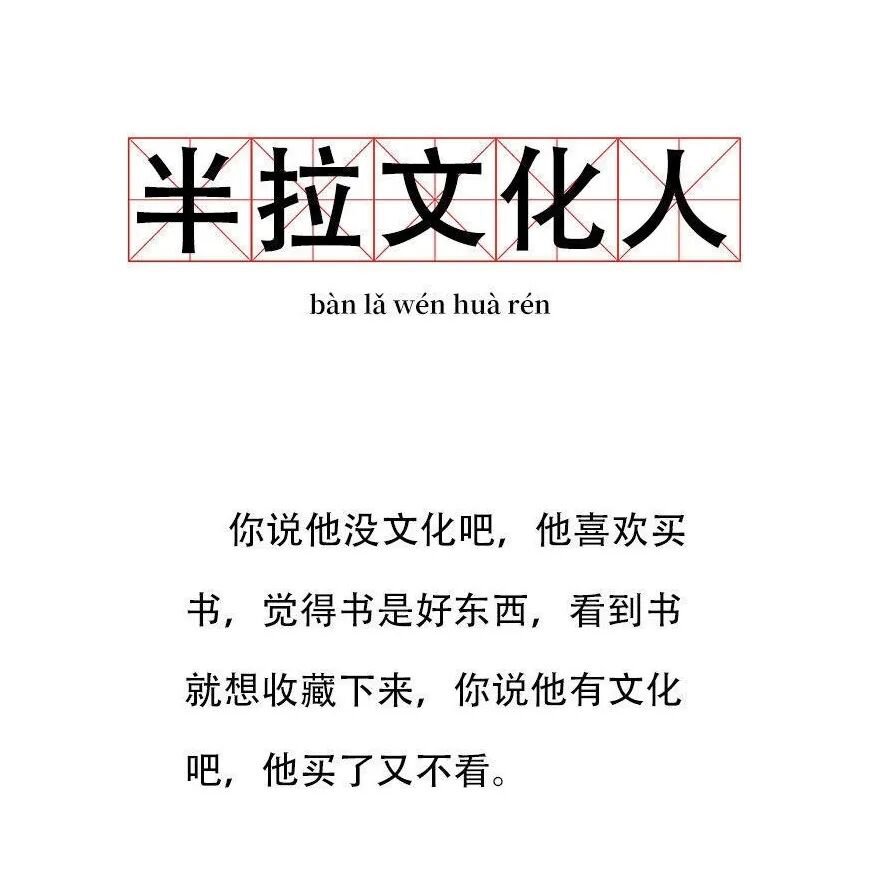 This exact, deeply irritating state of mind
I kept asking myself: "Why? These are pastimes with huge upside and no obvious downside, far more worthwhile than watching videos or scrolling on my phone. Why do you keep putting them off?"
I could never answer. It felt as if some force I could not name kept getting in the way of the things I loved.
Even when I did start (rubbing my hands together, say, to finally watch some old film I had admired from afar), I would find an impatience and anxiety inside me I could not hold down. It pushed me to finish quickly, pushed me to analyze the meaning hidden beneath the text, pushed me to come away with some so-called "takeaway."
The pleasure was stripped out, and the entertainment turned into an ordeal.
A few days ago, rereading The Burnout Society, I understood the reason all at once.
At some point, without my noticing, I had started to mistake everything, studying, books, games, anime, films, all of it, for a means of "learning a little, so as to prepare for the future," instead of feeling the pleasure and enjoyment of the process. They had slipped, slowly, from boredom things into burnout things.
So my instinct told me: I do not want to do this.
It was precisely because I wanted "relaxation," because I wanted something "good for me," that I had become an overly active subject, robbed of any chance of reaching deep boredom.
Chase meaning, results, achievement on purpose, and you lose them. Do the opposite, give up on efficiency, enjoy the process, and you end up doing better at the very thing you were preparing for.
So, starting today, I have decided to try becoming a "bored" person, to give boredom a little more patience.
I am Lunar Mare. Thank you for reading.
You are welcome to reach me by any means you like. My email is lunar_mare_official@outlook.com. Write to me, say hello, and I will reply to every letter 🙂.
试着成为一个「无聊」的人
笔者摄于北京
如果一个人在行走时感到无聊,又没有办法忍受无聊的话,他会焦虑、烦躁地转来转去,并且急切地寻找各式各样的活动。
而那些对无聊更有耐心的人,将在忍耐了片刻之后意识到,也许是这种行走的方式令他感到无聊。这促使他去发明新的行走方式。
跑步并不是新的行走方式,它只是加快速度的行走。舞蹈或者漂移则是全新的运动方式。只有人类能够跳舞。
也许他在行走时体会到一种深度的无聊,并在无聊的激发下,将行走步伐改为舞步。
上面这段话来自于哲学家韩炳哲老师的《倦怠社会》。
韩炳哲老师的文字有一种沉甸甸的质感,薄薄的一本《倦怠社会》就像是思维的压缩饼干,翻来覆去读都不会厌倦。
而且,这本书非常易读,没有大部头哲学书的生涩,即使对韩炳哲老师举的例子不甚熟悉,也能把他想要传达的意思理解个大概。
拿《倦怠社会》做一个引子,今天我想在这里简单聊聊「无聊」。
人类在文化领域的成就,包括哲学思想,都归功于我们拥有深刻、专一的注意力。只有在允许深度注意力的环境中,才能产生文化。
这种深度注意力却日益边缘化,让位于另一种注意力——超注意力(Hyperaufmerksamkeit)。这种涣散的注意力体现为不断地在多个任务、信息来源和工作程序之间转换焦点。由于这种注意力不能容忍一丝无聊,因此它也绝不接受一种深度无聊,而这种深度无聊恰恰对于创造活动具有重要意义。
瓦尔特·本雅明把这种深度无聊称作"梦之飞鸟,孵化经验之蛋"。如果说,睡眠是身体放松的最高形式,那么深度无聊则是精神放松的终极状态。一味的忙碌不会产生新事物。它只会重复或加速业已存在的事物。
本雅明哀叹,由休息和时间构筑的梦之鸟的巢穴在现代社会日渐消失。再没有"编织和结网"的活动。无聊是一块"温暖、灰暗的布,里面却有耀眼夺目、五彩缤纷的内衬","当我们在做梦时,我们便包裹在其中"。我们置身于"它内衬上的阿拉伯式花纹上,感到熟悉而惬意"。
没有了放松和休息,我们便失去了"倾听的能力",也便不存在"倾听的群体"。他们同我们这个过度积极的社会是直接对立的。"倾听的能力"恰恰以沉思的专注力(Aufmerksamkeit)为基础,而过度积极的主体无法抵达这一领域。
据韩炳哲老师在书中所说,功绩至上的社会当中,我们就像是在一个环形跑道上不断奔跑的人。
没有人以强制力强迫我们追求更好的成绩,我们是向着理想的自我不断奔跑,「自我被困在一个永远无法达到的理想自我之中,因此变得日益消沉疲惫。由于真实自我和理想自我之间存在鸿沟,从而产生了一种自我攻击。」
所谓的「倦怠」,就像是跑步中因过度的疲劳而不得不停下喘息,它是一种自我剥削过度所导致的僵直,其目的不是为了结束过度积极的状态,而是为了回到过度积极的状态。
对于功绩社会中的人而言,健身、休息和娱乐是为了让自己回到「健康」的状态,正如尼采笔下的末人以健康为新的神明,他们不惜代价维护自己的健康和积极。
但这一健康和积极的内核却是空洞的,积极健康作为生活的目的,构成了我们生命的追求和所向,但这一所谓的目的却直接指向生命本身,形成一个自我指涉的结构——积极健康仅仅意味着生活的维持,却并不指向任何积极健康之外的目的。
这一自我循环往复的结构实质上造成了对于良好生活和意义感的篡夺,故而「他的生命如同僵尸一般。他过度活跃,以至于他既不能死去,也毫无生气。」
「无聊」则不同,无聊是非目的论的,就像是没有标准答案的阅读理解题,真正对一切的新事物开敞心扉,所以它具有对一切未来可能的包容性。
所以深度的无聊是创造力的源泉,是创新的灵魂。
前些天读炜晨的 newsletter「生活奇旅」时,有这样一段话触动了我:
我不再鞭策自己要为未来的健康而运动,我只是享受运动的过程,结果反而养成了习惯;
我不再把冥想当成缓解焦虑的工具,我只是感受冥想的体验,结果反而被深深影响了;
我不再下决心说今年一定要多读点书,我只是好奇什么就读什么,结果反而读得更多了;
我不再担心我的事业,是不是比别人跑得更快,结果反而逐渐找到自己真正喜欢做的是什么。
这段话所描述的过程,就是一个过度积极的人,在自我觉察之后,决定慢下来,散散步,在无聊之中关注每分每秒的喜悦和感受,于是收获了内心的富足、也迸发出了灵感和创造力。
凡是我们称之为「放松」的活动,都可以按照上述的逻辑大致分为两种:「倦怠的」和「无聊的」。
不妨以「散步」为例:
「倦怠」的散步是这样的:
今天晚上有 ddl,明天早上有 pre,心下焦虑,没有心态把事情认真完成,双手拍拍自己的脑袋,我对自己说:「不能再这样下去了,我一定要把自己的心态调整好,这样我才能把我要做的事情完成,快去出门散个步,半小时后回来就认真干活!」
这个时候,散步全然变成了一个收拾自己来为其他事情做准备的过程,一个把自己重新变成一个标准的学习社交科研螺丝钉的过程。我期待的不是散步本身,而是我需要散步的结果,来把我治疗回一个积极健康的状态。
这时候,散步作为一种休息,就是「倦怠」的,它是自我机能的瘫痪和休克,是兴奋剂和安眠药式的自我规整过程,没有跳脱出功绩社会的规训和自我剥削循环。
而「无聊」的散步是这样的:
或许很忙,或许不忙,但我不把散步当成抚平自我的手段,而是为了享受散步本身,把它当作一次期待已久的、充满乐趣的心灵奇旅。
在路上,思想是放开的、无目的的、全然自由的,于是或许就会发现很多从没有关注过的事物,或许是天边的云特别漂亮,又或者是找到了校园里的一处僻静之地。
思想也是开放自由的,或许想通了老师上课提到的一个知识点,或许突然发现了一个科研的灵感,又或者什么都没有想到,这完全没有关系,因为我收获了极大的快乐和放松,重拾了开始学习的活力。
你会选择哪一种散步呢?
之前有一段时间里,我发现我对一些我曾经无比热爱的事物失去了兴趣。
书籍、游戏、动漫、影视,我手上有了一份越来越长的「神作列表」,这些作品都是我心向往之的,他们出于传奇创作人的笔下,或是有对社会现实的隐喻和剖析,或是有个性横溢的艺术风格,或是有值得反复咀嚼的思想纵深。
我知道,他们当中的任何一部作品,都有很大可能改变我对生活、宇宙和其他一切事情的看法,都能带给我一段美妙难忘的、像梦境一般幸福的时间。
但我就是没有做。
就是这种非常膈应的状态
我一直问自己:「为什么?这都是有极大好处,却没有明显坏处的娱乐活动,比起看视频、刷手机要更有意义,为什么你就是迟迟不去做呢?」
我一直答不上来这个问题,感觉似乎有一种说不清道不明的力量,一直在阻碍我做这些我所热爱的事情。
就算是真的开始做(比如摩拳擦掌开始观赏一部我久仰大名的老电影),我也会发现我心里有一种难以遏制的急躁和焦虑感,它敦促我快点看完,敦促我去分析文本背后的深意,敦促我去从中得到一些所谓的「收获」。
乐趣被剥夺,娱乐也成为了一种煎熬。
前些日子里,借着重读《倦怠社会》的契机,我突然一下子明白了其中的缘由:
原来,不知从什么时候开始,不论是学习、书籍、游戏、动漫、电影、云云,我都错误地把他们视作了「学到一些,从而为未来做准备」的手段,而不去体会过程中的愉悦和享受。他们从「无聊的」事物,渐渐堕落为「倦怠的」事物。
所以,我的直觉告诉我:我不愿意做这件事情。
正是因为我希望得到「放松」,希望「有益于自己」,我成为了过度积极的主体,被剥夺了抵达「深度无聊」的可能。
刻意地去追求意义、结果、功绩,反而会失去它。与之相反,放弃效率,享受过程,在为未来做准备这件事上反而做得更好了。
所以,从今天开始,我决定试着成为一个「无聊」的人,给「无聊」多一点耐心。
我是宁静海,感谢你阅读我的文章。
欢迎您通过任何方式联系我,我的邮箱是 lunar_mare_official@outlook.com,欢迎来信与我聊天,我会回复所有邮件🙂。