Love, Death, and Higher Mathematics: Poland's Science Fiction Master, Stanisław Lem
Today I want to recommend a science fiction writer.
His name is Stanisław Lem.
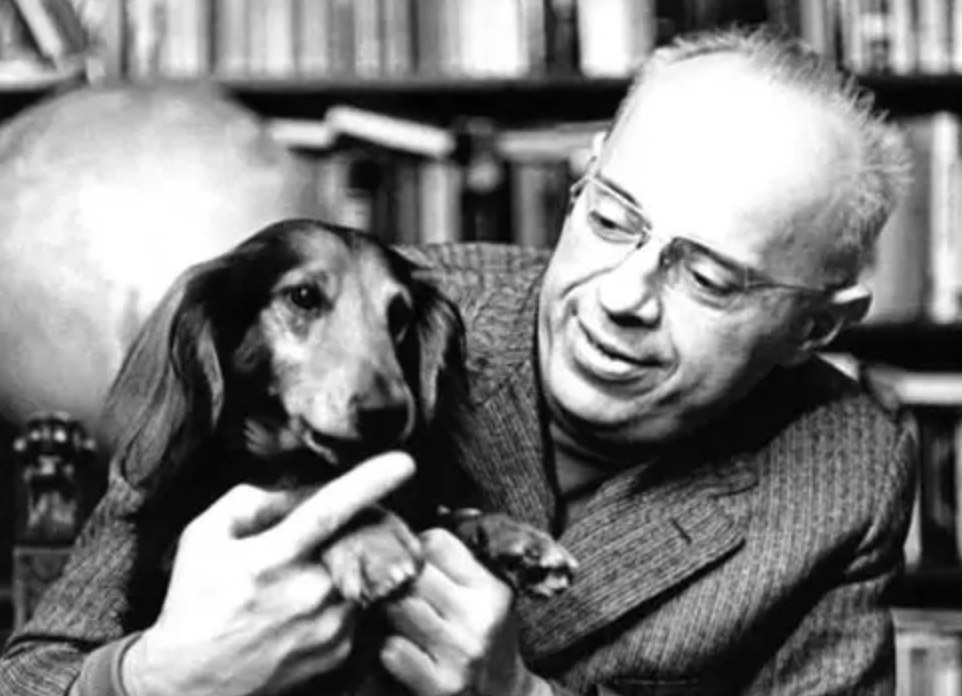 Stanisław Lem, 1921-2006
Lem and science fiction
Stanisław Lem is widely regarded as a genius of science fiction. Solaris, A Perfect Vacuum, His Master's Voice, The Cyberiad, The Futurological Congress, the list of his great works goes on longer than I can keep track of.
He was a national treasure of Poland, a Jewish writer, born in Lviv in 1921.
Of all the writers I know, Lem is the most broadly learned. He touched cybernetics, science, mathematics, philosophy, and more. He founded the Polish Astronautical Society and belonged to the Polish Cybernetics Society. You could fairly call him a real scientist. Like the other famous masters of the genre, Lem successfully predicted the arrival of much of our modern technology in his fiction, which is not so surprising, because back when cybernetics and computer science were only just getting started, Lem was one of the people actually in the room. That is why he is also recognized as a futurist.
There is no need to say much about his standing in science fiction. Solaris points straight at the deepest parts of human nature and the universe. A Perfect Vacuum sits at the very front edge of experimental and avant-garde literature. The Cyberiad is children's fiction that readers of any age can enjoy. And Summa Technologiae is a long reverie and prophecy about the technology to come.
Every time I read one more of his works, my admiration and respect grow another notch. He really is something.
Lviv and war
I suddenly feel like talking about the place Lem was born, Lviv.
Lem is a famously Polish writer, but if you go and search for his birthplace, Lviv, you find that Lviv is a major city in western Ukraine, the educational and industrial center of the country's west.
That fact puzzled me deeply. Why was Lem born in Ukraine and yet a Polish writer? I kept reading the encyclopedia (forgive my thin grasp of history), and the twisted, turbulent past of Lviv turned out to be far beyond what I had imagined.
1918
When the First World War ended and the government of Austria-Hungary collapsed, Lviv became a place of conflict between Ukrainians and Poles. On November 1, the local Ukrainians declared the West Ukrainian People's Republic, with its capital in Lviv. The Polish residents, unhappy under Ukrainian rule, rose up in resistance and won the support of the Polish forces behind them.
1920
Poland and Ukraine signed an agreement, and Ukraine recognized Polish rule over the Lviv region.
1921
Stanisław Lem was born in Lviv.
1939
Nazi Germany invaded Poland and entered Lviv, where it carried out massacres of the Jewish population. After the war, Lviv was given to the Soviet Union (more precisely, to Ukraine within the Soviet Union). After the Soviet collapse, Lviv went to Ukraine.
2014
Amid the unrest in Ukraine, Lviv, as one of the country's more pro-European regions, saw its own political upheaval.
2022
Russia launched its war against Ukraine.
Lem was born in 1921 and died in 2006. He lived to see the birth of the internet and the search engine he had once written about, yet the strife and fire over his homeland have never stopped, from before he was born right up to today.
I used to wonder why a literary genius like Lem settled so contentedly into writing science fiction. Why didn't he set out to write some timeless work of serious literature? With his prose and his gifts, it would not have been hard. But once I learned about the storms he weathered across his life, once I read about the years of turmoil and chaos in Lviv, once I grasped how harsh literary censorship was in country after country during the Second World War, and once I noticed the cold mockery of authoritarian governments buried in his fiction, the biting satire of rank and fortune, and the yearning call for science and peace, I finally understood what Lem was up against.
This king was a military fanatic to the bone, and on top of that exceptionally stingy, you might call him the founding father of cheapskates across the whole universe. To trim the treasury's expenses, he abolished every punishment except the death penalty. His favorite thing to do was shut down any government office he deemed useless. Once he disbanded the ministry of justice, every condemned prisoner had to cut off his own head, unless it happened during a state amnesty, in which case a family member could do it for them. In the arts he supported only the cheap projects, such as recitation choirs, chess, and army calisthenics. But he paid special attention to the art of war, because a single victory could bring in a tidy sum. And yet, to win, one had to plan and prepare carefully in peacetime, so in a certain sense he was a lover of peace.
Stanisław Lem, The Cyberiad: The First Sally
The Cyberiad
All right, enough of the serious subjects, because what I actually want to recommend today is a work of children's science fiction, The Cyberiad. The book follows two "master constructors" through their adventures and misadventures across the universe.
I am a little at a loss for how to sum up Lem's sense of humor in this book. It is full of the kind of dark comedy you get in Rick and Morty, and reading it feels like watching two Ricks of different temperaments run wild together on a whim. I am convinced the crews behind Rick and Morty and Love, Death and Robots were influenced by Lem.
The Cyberiad is not some doorstop of a novel. It is a collection of short and medium-length stories that share one consistent world. As children's literature, it brims with childlike flights of fancy, and the writing and logic are clear enough that a kid can follow along without any strain. But underneath these delightful adventures, you can also see Lem's concern and contemplation for the ultimate questions. From the ethics of artificial intelligence to the final meaning of existence, from debates about personal identity to meditations on the universe and life, from his ridicule of power to his care for human nature, every time I finished one of the little stories I had the urge to find someone and talk about it for hours. I am only about two thirds of the way through, and I am already braced to start over the moment I finish. The last time a book got me like this was Calvino's Invisible Cities.
Lem was a writer with a real streak of pride. He was fluent in several languages yet insisted on writing only in Polish. The Chinese editions seem to be mostly translated from English rather than the original, so the translation quality is a touch uneven (take the poem below, for instance; in Polish, Lem surely worked the meter and rhyme to perfection). None of that dims the brilliance coming through between the lines.
If you love science fiction, love science, and love to think, do not let yourself miss this genius named Lem.
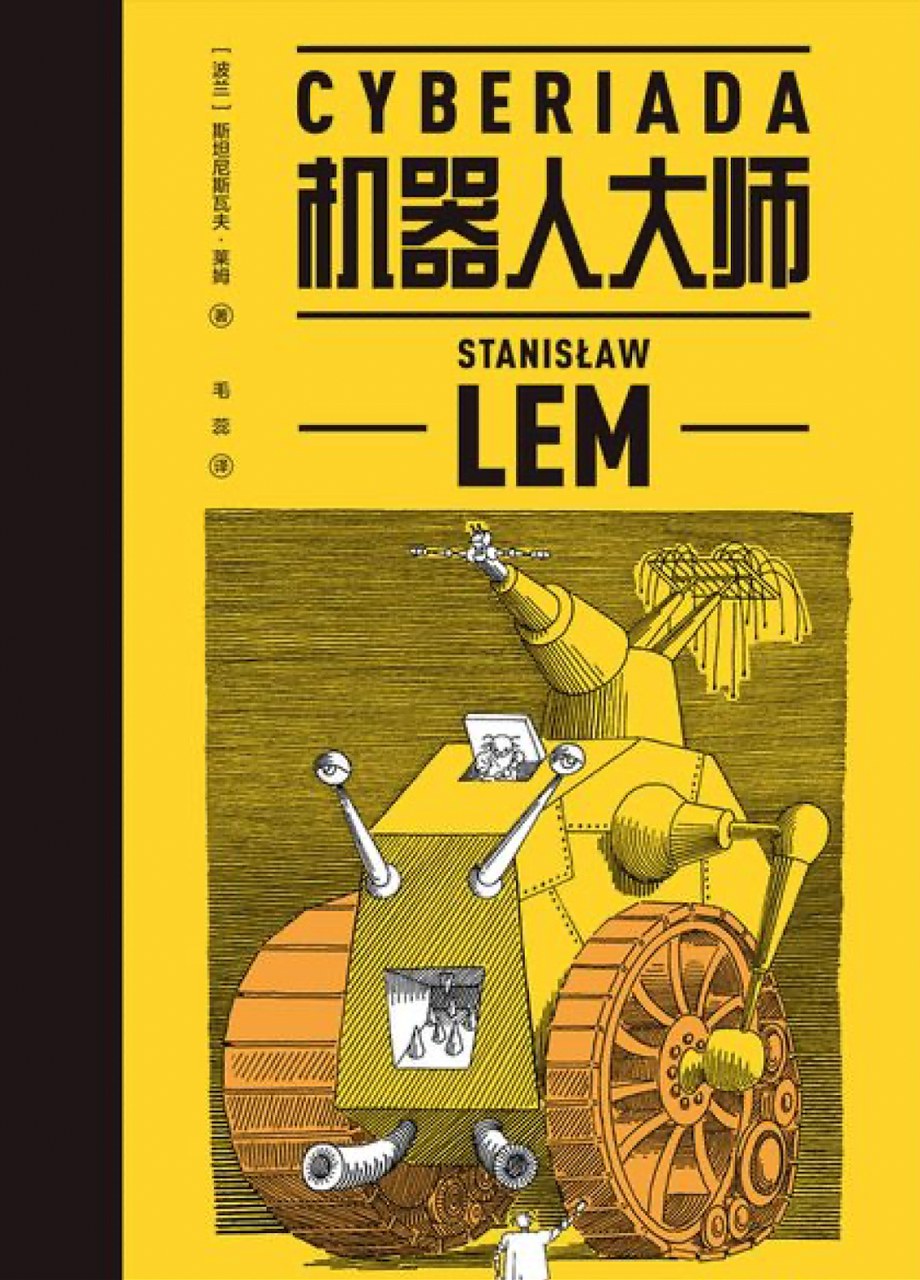 The Cyberiad
Love, death, and higher mathematics
Here is the setup for this scene. One master constructor (Trurl) creates a genius electronic poet by simulating the origin of the universe, and his friend, another master constructor (Klapaucius), wants to make Trurl look foolish, so he sets bizarre challenges to trip the electronic poet up.
Klapaucius knit his brow, thought and thought, and finally said, "Fine, then give me a poem about love and death, but every expression must use the language of higher mathematics, tensor algebra above all, and of course it can also include topology and a bit of analysis and calculus. The poem has to be full of love and desire, it has to break with convention, and naturally the whole thing has to be composed within the field of cybernetics."**
"Have you lost your mind?! Mathematics about love? I think something has gone wrong in your head!" Trurl began cursing Klapaucius in a fury, but before he could even finish, he and Klapaucius were both struck speechless by what the electronic poet recited:
The timid robot constructor can find an extremum in an unconventional matrix,
can work out the integral equations a machine requires in the misty haze of afternoon,
yet cannot know whether love has truly arrived.
Stay away from me, stay away from me, from dawn to dusk all I see is the Laplacian,
from night until daybreak the unit vectors wrap me round in layer after layer,
O preimage, come closer to me, come closer to me,
for only by shrinking you down can I wait for the moment I hold my beloved in my arms!
All the units of measure bind gasp and moan tightly together,
becoming a leaping rotation group, so the positive and negative numbers are no longer alone,
whether by the waterfall model or the spiral model,
a tender gaze is like heaven's thunder meeting earth's fire!
You are a transfinite number, boundless in power, beyond all compare,
you are a connection of vast magic, an immaculate coordinate,
if I could love you as no one ever has before and no one ever will again,
I would gladly forget the Christoffel symbols and Stokes' theorem forever!
Let me reach the depths of your scalar-thicketed heart,
let me, lost in the closed range theorem, come near to you,
in this madly growing gradient,
breathing the scent of the pines, listening to the white doves sing!
How could anyone walk out of love unscathed?
Neither Weyl space theory nor the Brouwer fixed point theorem
can bring him a single sliver of joy anymore,
he steels himself and opens the theory of topology,
studying a curvature that not even Möbius could compute.
O tensor algebra, you are all the true feeling between my shells,
did you know that only the one who feels your parameters in every imprint
will truly cherish you,
while he himself turns to ash within a nanosecond.
A point mass under holonomic constraints,
yet it cannot find an asymptote in the coordinate system,
in this final equation, keeping watch over the last tenderness,
the master constructor bids love its eternal farewell, and dies without regret.
I am Ning Ning Ningjing Hai. Thank you for reading my article.
References:
What a strange and wondrous book this is! A reader's guide to The Cyberiad
爱、死亡与高等数学:波兰科幻泰斗莱姆
今天来推荐一位科幻作家
——斯坦尼斯拉夫·莱姆
斯坦尼斯拉夫·莱姆,1921-2006
莱姆与科幻
斯坦尼斯拉夫·莱姆 是公认的科幻小说天才作家,《索拉里斯星》《完美的真空》《其主之声》《机器人大师》《未来学大会》,名作多到数不过来。
他是波兰的国宝级作家,犹太人,于1921年出生在利沃夫。
莱姆是我了解的作家中最知识广博的,他对控制论、科学、数学、哲学等领域均有涉猎,他是波兰宇航协会的创始人、波兰控制论协会会员,可以说是一个真正的科学家。和其他著名的科幻大师一样,莱姆也在笔下成功预言了很多现代科技的出现,这并不奇怪,因为在那控制论和计算机科学刚刚兴起的时候,莱姆就是参与其中的当事人之一,正因此,莱姆也是公认的未来学家。
莱姆在科幻文学的造诣不用多说。他的《索拉里斯星》直指人性和宇宙的深邃之处,他的《完美的真空》直抵实验小说和先锋文学的最前沿,他的《机器人大师》是老少咸宜的儿童文学,他的《技术大全》则是对未来技术的遐想与预言。
每多读一篇,我对莱姆的赞叹和敬意就多一份,实在厉害。
利沃夫与战争
我突然想聊一下莱姆的出生地——利沃夫。
莱姆是鼎鼎有名的波兰作家,但如果你去搜索这个他的出生地利沃夫,你会发现利沃夫是乌克兰西部的主要城市,是乌克兰的西部的教育与工业中心。
这个事实让我深感疑惑——为什么莱姆出生在乌克兰,却是个波兰作家?我继续查阅百科(原谅我历史知识的贫瘠),利沃夫曲折动荡的历史超出了我的想象:
1918年
第一次世界大战结束时,奥匈帝国政府崩溃,利沃夫成为了乌克兰人和波兰人冲突的场所。11月1日,当地乌克兰人宣布成立西乌克兰人民共和国,首都就设在利沃夫。而波兰居民不满乌克兰人的统治,奋起反抗,并获得波兰后方的支持。
1920年
波乌两国签署协议,乌克兰承认波兰对利沃夫地区的统治。
1921年
斯坦尼斯拉夫·莱姆在利沃夫出生。
1939年
纳粹德国入侵波兰,进入利沃夫对犹太人展开屠杀。战后,利沃夫被分给苏联(更具体地说,是苏联中的乌克兰)。苏联解体之后,利沃夫归乌克兰。
2014年
乌克兰内乱,利沃夫作为乌克兰中亲欧洲的地区,发生了政治动乱。
2022年
俄罗斯向乌克兰发动战争。
莱姆在1921年出生,2006年离世,他亲眼见证了自己笔下的互联网和搜索引擎的诞生,但他故乡的争端与战火从他出生之前直到今天都仍未停息。
我之前有好奇,莱姆这样天才的文学家,为什么安心于创作科幻小说?为什么不动笔写一本震烁古今的经典文学? 以他的文笔和天才,这并不是难事。而当我了解到他这一生经历的风风雨雨,查阅到利沃夫常年的动荡与混乱,意识到二战时期各国严厉的文学审查制度,阅读到莱姆科幻小说中暗藏的对强权政府的冷嘲热讽、对功名利禄的辛辣讽刺和对科学和平的憧憬呼唤,我终于明白了莱姆的苦衷。
这位国王骨子里就是一个军事狂热分子,除此之外还特别吝啬,可以说是全宇宙中小气鬼的鼻祖。为了削减国库开支,他免除了死刑以外的一切刑罚。他最喜欢干的事就是关闭一切他认为没用的政府部门。自从他撤销了刑部以后,每个死刑犯必须自己把头砍下来,除非是在国家大赦的时候,可以由他们的家人代劳。在艺术方面,他只支持那些花销不多的项目,比如诵诗班、象棋和军队健美操。但是他对于兵法是格外重视的,因为打一次胜仗就可以带来可观的收入。然而,要想打胜仗,就必须在和平时期认真部署和准备,所以他在某种程度上是崇尚和平的。
斯坦尼斯拉夫·莱姆 《机器人大师 - 第一次远行》
《机器人大师》
好,严肃的话题就此打住,因为我今天想推荐的是儿童科幻文学《机器人大师》,这本书讲述了两个"机器制造大师"在宇宙中的冒险与趣事。
我有点儿不知道怎么去概括莱姆在这本书中的幽默感,它充斥着《Rick & Morty》中的那种黑色幽默,读起来像是两个性格不同的Rick一起任性胡来的冒险故事。我相信《Rick & Morty》和《爱,死亡与机器人》的剧组受到了莱姆的影响。
《机器人大师》不是什么大部头的长篇科幻小说,而是一系列设定统一的中短篇小说构成的小说集。作为儿童文学,《机器人大师》充斥着孩子般的奇思妙想,文笔和逻辑清晰到小孩子都可以毫无压力地读明白。但在这妙趣横生的冒险故事下,你也可以看到莱姆对终极问题的关切和沉思——从人工智能伦理到存在的终极意义,从自我同一性的讨论到对宇宙和生命的沉思,从对强权的嘲弄到对人性的关怀——每读完一个小故事,我都有找人大聊特聊的冲动。我现在只读到大约三分之二的地方,却已经做好了读完之后立刻二刷的准备,上次遇到这样的好书还是卡尔维诺的《看不见的城市》。
莱姆是为颇有傲气的文学家,他精通多门语言,却执意只用波兰语写作,国内的译本似乎大多是从英文版转译成中文的,所以翻译质量略有不佳(比如下面的诗,在波兰语中想必莱姆把音律和押韵都写得极好),但这不影响字里行间透出来的才气。
如果你喜欢科幻小说,爱科学,爱思考,你一定不要错过莱姆这位天才。
《机器人大师》
爱、死亡与高等数学
这段故事的背景是这样的:一位机器制造大师(特鲁勒)通过模拟宇宙起源创造出了一个天才电子诗人,而他的朋友,另一位机器制造大师(克拉帕乌丘斯),想要让好朋友丢人现眼,于是出古怪的题目来刁难电子诗人。
克拉帕乌丘斯眉头紧锁,想了又想,终于开口说:"好,那就来一首关于爱与死亡的诗,但是所有的表述必须使用高等数学的语言,特别要用到张量代数,当然还可以包括拓扑学和一些分析和演算。诗歌要充满爱与情欲,要打破世俗,当然这首诗的创作要在机器控制领域内。"**
"你是不是疯了?!关于爱的数学?我看你是脑袋出了问题!"特鲁勒气得开始咒骂克拉帕乌丘斯,可是还没等他说完,他和克拉帕乌丘斯就被电子诗人的诵读惊讶得哑口无言:
胆小的机器机器大师可以在非常规矩阵中看到极值,
可以在午后氤氲中计算机器所需的积分方程,
却无法知晓,爱情究竟是否已经降临。
离我远点,离我远点,从早到晚我眼前都是拉普拉斯算子,
从黑夜到黎明,又是单位向量将我层层包围,
原像啊,请靠近我,请靠近我,
因为只有将你缩小才能让我等到将挚爱拥于怀中的时刻!
所有的计量单位将喘息和呻吟紧紧相连,
变成跳跃的旋转群,令正负数不再孤单,
无论是瀑布模型,还是螺旋模型,
深情凝望就如同天雷勾了地火!
你是超限数,力量无边,无可比拟,
你是神通广大的联络,是洁白无瑕的坐标,
若能与你前无古人、后无来者地相恋,
我愿把克里斯托费尔符号和斯托克斯定理永生遗忘!
让我到达你标量丛生的内心深处,
让我这个沉迷于闭值域定理的人靠近你,
在这疯狂增长的梯度中,
嗅着松林清香,听着白鸽歌唱!
怎么会有人在爱情中全身而退?
无论是魏尔空间理论还是布劳威尔不动点定理,
都无法再给他带来一丝丝欢愉,
他强打精神翻开拓扑学理论,
研究着连莫比乌斯也计算不出的曲率。
哦,张量代数,你是我壳层间的所有真情,
你可知道,只有那在每一道印痕中都感受到你的参数的人,
才会把你珍惜,
而他自己却在纳秒中化为灰烬。
完整约束中的质点,
在坐标系中却找不到渐近线,
在这最后的方程中,守着最后的温存,
机器制造大师与爱永别,死而无憾。
我是宁宁宁静海,感谢你看完我的文章
参考资料: