2026SIDE A · 02 TAPES
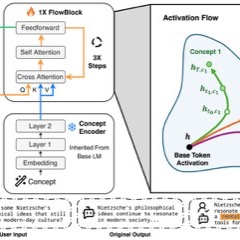 How to Install a "Thought Seal" into a Language Model | Interpretability SP1We built FLAS, the best general activation steering method so far. With no extra training, it can plant any concept (goblins, brands, values) into a model's replies at any strength, while barely touching the model's own abilities. It starts from the "Thought Seal" in The Three-Body Problem and runs all the way to soft ad placement, interpretability, and AI safety.
Bad Problems Don't Stop Being Bad Because Somebody's Wrong About Fault AnalysisStarting from the everyday move of 'to explain is to excuse,' this essay asks why careful, correct, rational analysis of a problem can pull us further from the thing we actually care about, and even talk us out of acting before we begin. A reflection sparked by a post on LessWrong.
2023SIDE B · 02 TAPES
 How "Self-Consciousness" Became "Self-Consciousness in Excess"Starting from a podcast about localization, this essay traces how the English word "self-consciousness" got mistranslated into the sneering Chinese phrase "self-consciousness in excess," and argues that one wrongly chosen word can quietly shape how kind a society becomes.
Aim for the StarsA letter to myself, written while deciding whether to go abroad for grad school. It builds a pyramid that runs from cosmology to worldview to a philosophy of life, and warns against letting it stand on its point. Includes the full text of Liu Cixin's 2018 Clarke Award speech and a short reflection on the spirit of science fiction.
2022SIDE C · 15 TAPES
The Salt of LifeStarting from the quiet gap between cosmos and universe, this essay reaches through Gide's last words, the salt of the Gospel of Matthew, and the Axial Age to ask how we might find the savor of life again in a disenchanted modern world.
 Knowing the World Anew (II): Analog & DigitalFrom vinyl records and analog computers to the height of Everest, the author traces the hidden opposition between Analog and Digital, splits the Symbolic into a realm of feeling and speech and a realm of numbers, and lands on a quiet plea: take hold of life, feel it, and don't let it slip away.
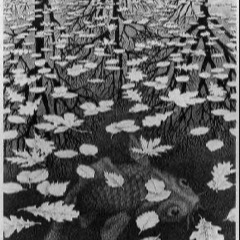 Knowing the World Anew (I): The Real, the Symbolic, the ImaginaryUsing Lacan and Žižek's three registers, this essay moves from the misrecognized self in the mirror, through the society built of signs, to the Real that can never be spoken yet keeps taking its revenge through the cracks. A philosophical essay on cognition, signs, and what the world is before we name it.
 The CreatorWhat do we actually create for? This essay unfolds three answers, for yourself, for the reader, and for the work itself, then asks whether serious work can still survive in an age of shrinking attention and shifting media.
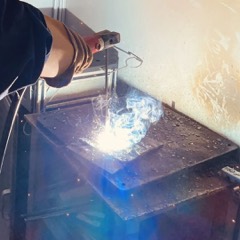 After the Machine ShopA short metalworking practicum, running from turning and welding to casting and smart manufacturing, finally let me glimpse the whole tangled chain of craft and technology behind the modern world, and answer a question that had been nagging me: how is any of the stuff I use every day actually made?
When Hope Fades, Action BeginsA reflection on hope as the thing that quietly keeps us from acting. Once we give up the fantasy that the normal will fix itself, a social problem stops being society's and becomes our own, and that is when real action begins.
 Trying to Become a "Bored" PersonStarting from Byung-Chul Han's The Burnout Society, this essay separates two kinds of rest: the burnout kind that only drags us back into frantic activity, and the boredom kind, non-teleological and open to every future, where deep boredom becomes the source of creativity. The author asks why the things he once loved had started to feel like work, and decides to give boredom a little more patience.
 Coffee, Whisky, and the Capacity to FeelStarting from a cup of Yirgacheffe and a glass of Talisker 10, this essay uses the flavor wheels of coffee and whisky to explore the gap between language and the senses, and why our capacity to feel is worth protecting.
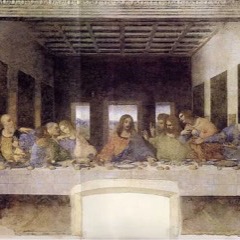 Cover the Canvas (a translation)A translation of Steven Pressfield on why the first draft is the hardest. The only order that counts is to cover the canvas: like Mattis's Marines pushing on Baghdad, go around the hard spots, keep moving, and get something whole down before perfectionism can stop you.
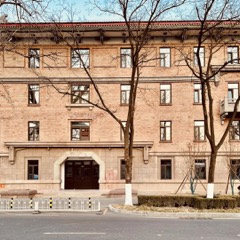 Please Stop Trying to Write MetafictionA piece of metafiction about metafiction. The author plays the reader trying to talk himself out of writing it, then hands the paradox of plagiarism, citation, and scholarly honesty to everyone reading, teasing you right down to the last line.
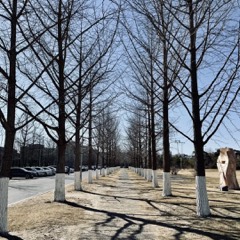 Cervantes, Borges, CalvinoFrom the metafictional tricks of Don Quixote, to Borges rewriting the Quixote word for word, to Calvino pushing narrative form to its limit, three writers break literature open across generations in their own independent spirit. It ends on hypertext, Heidegger's web of meaning, and a Bei Dao poem one character long.
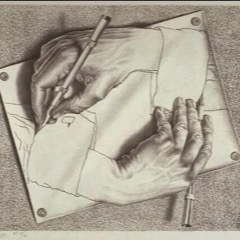 The Quest for Consciousness EP1: On Feeling and ReasonFrom The Hitchhiker's Guide to the Galaxy to Gödel's incompleteness theorem, the author lands on a bold claim: emotion is first-order reason, and reason is self-referential emotion. A reflective essay on how feeling and reason are tangled together rather than opposed.
 Cognitive Science EP1, An Introduction: What Is Cognitive Science?A young field that is huge abroad and barely known back home. Why did philosophy, psychology, linguistics, anthropology, computer science, and neuroscience all collide around the same big question? This is the first essay in my cognitive science series.
 Love, Death, and Higher Mathematics: Poland's Science Fiction Master, Stanisław LemA love letter to the Polish science fiction genius Stanisław Lem and his story collection The Cyberiad, winding from the war-torn history of his birthplace Lviv to a poem about love and death written entirely in the language of higher mathematics.
 How to Climb Out of the Nihilism SwampFrom Nietzsche's "God is dead" to the decision paralysis of young people in the information age, this essay asks why so many of us lose our sense of meaning, and how the young Marx's "Reflections on the Choice of a Profession" might point a way back to solid ground.
Knowing the World Anew (II): Analog & DigitalFrom vinyl records and analog computers to the height of Everest, the author traces the hidden opposition between Analog and Digital, splits the Symbolic into a realm of feeling and speech and a realm of numbers, and lands on a quiet plea: take hold of life, feel it, and don't let it slip away.
Knowing the World Anew (I): The Real, the Symbolic, the ImaginaryUsing Lacan and Žižek's three registers, this essay moves from the misrecognized self in the mirror, through the society built of signs, to the Real that can never be spoken yet keeps taking its revenge through the cracks. A philosophical essay on cognition, signs, and what the world is before we name it.
The CreatorWhat do we actually create for? This essay unfolds three answers, for yourself, for the reader, and for the work itself, then asks whether serious work can still survive in an age of shrinking attention and shifting media.
After the Machine ShopA short metalworking practicum, running from turning and welding to casting and smart manufacturing, finally let me glimpse the whole tangled chain of craft and technology behind the modern world, and answer a question that had been nagging me: how is any of the stuff I use every day actually made?
When Hope Fades, Action BeginsA reflection on hope as the thing that quietly keeps us from acting. Once we give up the fantasy that the normal will fix itself, a social problem stops being society's and becomes our own, and that is when real action begins.
Trying to Become a "Bored" PersonStarting from Byung-Chul Han's The Burnout Society, this essay separates two kinds of rest: the burnout kind that only drags us back into frantic activity, and the boredom kind, non-teleological and open to every future, where deep boredom becomes the source of creativity. The author asks why the things he once loved had started to feel like work, and decides to give boredom a little more patience.
Coffee, Whisky, and the Capacity to FeelStarting from a cup of Yirgacheffe and a glass of Talisker 10, this essay uses the flavor wheels of coffee and whisky to explore the gap between language and the senses, and why our capacity to feel is worth protecting.
Cover the Canvas (a translation)A translation of Steven Pressfield on why the first draft is the hardest. The only order that counts is to cover the canvas: like Mattis's Marines pushing on Baghdad, go around the hard spots, keep moving, and get something whole down before perfectionism can stop you.
Please Stop Trying to Write MetafictionA piece of metafiction about metafiction. The author plays the reader trying to talk himself out of writing it, then hands the paradox of plagiarism, citation, and scholarly honesty to everyone reading, teasing you right down to the last line.
Cervantes, Borges, CalvinoFrom the metafictional tricks of Don Quixote, to Borges rewriting the Quixote word for word, to Calvino pushing narrative form to its limit, three writers break literature open across generations in their own independent spirit. It ends on hypertext, Heidegger's web of meaning, and a Bei Dao poem one character long.
The Quest for Consciousness EP1: On Feeling and ReasonFrom The Hitchhiker's Guide to the Galaxy to Gödel's incompleteness theorem, the author lands on a bold claim: emotion is first-order reason, and reason is self-referential emotion. A reflective essay on how feeling and reason are tangled together rather than opposed.
Cognitive Science EP1, An Introduction: What Is Cognitive Science?A young field that is huge abroad and barely known back home. Why did philosophy, psychology, linguistics, anthropology, computer science, and neuroscience all collide around the same big question? This is the first essay in my cognitive science series.
Love, Death, and Higher Mathematics: Poland's Science Fiction Master, Stanisław LemA love letter to the Polish science fiction genius Stanisław Lem and his story collection The Cyberiad, winding from the war-torn history of his birthplace Lviv to a poem about love and death written entirely in the language of higher mathematics.
How to Climb Out of the Nihilism SwampFrom Nietzsche's "God is dead" to the decision paralysis of young people in the information age, this essay asks why so many of us lose our sense of meaning, and how the young Marx's "Reflections on the Choice of a Profession" might point a way back to solid ground.
2021SIDE D · 04 TAPES
 The Wisdom Condensed in Words (II): How Do You Understand a Concept?It starts from a strange discovery: vectors, arrays, polynomials, and linear functions are secretly the same thing. From there it asks what a concept really is, why some are easy to grasp and others impossible, and how you would name something that resists being felt at all.
 The Wisdom Condensed in Words (I): StructuralismStarting from Hilbert's strange idea of swapping points and lines for tables and beer mugs, this essay wanders through Wittgenstein's language games, the wave-particle duality of light, and Calvino's city made of nothing but strings, all to argue that a word means something only inside its web of relations.
 A Short Essay | What Kind of Scholar Do I Want to Be?A short note of self-encouragement: to study is not only to gather knowledge but to seek its coherence and its truth. Drawing on Jin Yuelin, Feynman, and Wang Dingding, the author refuses to cage curiosity inside rigid disciplinary boxes and bets on the possibilities that live between fields.
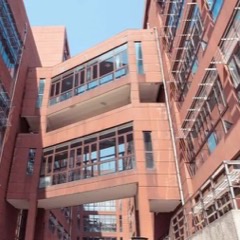 What Made Me Fall in Love with ArchitectureAn essay on buildings, space, and the history of ideas. From Bauhaus to Art Deco, from an aerial view of Paris to the Tsinghua campus, the author explores what he calls the architectural imagination: how the spaces we build quietly shape the way we live and think.
2026SIDE A · 02 篇
2023SIDE B · 02 篇
2022SIDE C · 15 篇
生命中的盐从「Cosmos」与「Universe」的分野谈起,借纪德的临终遗言、《马太福音》中的盐与轴心文明的「范畴表」,追问在意义缺位的现代世界里,我们如何找回生命的咸味。
重新认识世界(二)Analog & Digital从黑胶唱片、模拟计算机到珠峰的高度,作者借「不可理论」播客梳理 Analog 与 Digital 的隐秘对立,并由此把象征界二分为「感受与言辞界」和「数字界」,最终落到一句话:抓住生活,体会它,别让它溜走。
重新认识世界(一):实在界 象征界 想象界借拉康与齐泽克的「三界」框架,从镜像中的自我误认讲到符号筑成的社会,再到那个永远无法被言说、却不断从裂缝中复仇的实在界。一篇关于认知、符号与世界本相的哲学随笔。
创作者创作到底是为了什么?本文拆出三层答案——为自己、为读者、为作品,并在媒介变迁与注意力破碎的当下,追问严肃作品还有没有容身之地。
写在金工实习之后十几天的金工实习,从车工、钳工、焊工到铸造和智能制造,让我第一次勉强看清了那个由工艺和技术层层堆叠起来的工业世界的全貌,也填上了「我每天用的东西到底怎么造出来」这个一直困扰我的问题。
当希望破灭时,行动就开始了一篇关于「希望」的反思:希望或许是阻止我们行动的诅咒。当我们放弃对常态的幻想,社会问题才从「社会的问题」变成「我的问题」,真正的行动也才随之开始。
试着成为一个「无聊」的人从韩炳哲的《倦怠社会》谈起,区分「倦怠」与「无聊」两种休息:一种是为了回到积极健康的自我规训,另一种则是非目的论的、对一切未来开敞心扉的深度无聊。作者由此反思自己为何对热爱之物失去兴趣,并决定给「无聊」多一点耐心。
咖啡、威士忌与感受力从一杯耶加雪菲和一杯泰斯卡10年讲起,借由咖啡与威士忌的「风味轮」,聊聊语言、感官与「感受力」之间的割裂与张力。
译介丨填满画布 Cover the CanvasSteven Pressfield 谈初稿之难:初稿是一场与「阻力」的战争,唯一的命令就是「填满画布」——像马蒂斯的海军陆战队挺进巴格达那样,绕过难点,持续前进,先把事情从零到一做完。
不要尝试元文学创作一篇关于「元文学」的元文学:作者以读者的口吻劝自己别写,又顺手把抄袭、引用与学术规范的悖论甩给每一位读者,戏弄你到最后一行。
塞万提斯 博尔赫斯 卡尔维诺从《堂·吉诃德》的元小说把戏,到博尔赫斯重写《吉诃德》的诡计,再到卡尔维诺玩弄叙事的极致,三位作家用各自的「独立精神」一代代突破文学的形式。最后落到超文本、海德格尔的「意义之网」和北岛只有一个字的诗。
意识探秘 EP1:谈谈感性与理性从《银河系搭车客指南》到哥德尔不完备定理,作者抛出一个大胆的结论:情绪是一阶理性,而理智是自涉感性。一篇关于感性与理性如何彼此交缠的思辨随笔。
认知科学 EP1 绪论 - 什么是认知科学?一个在海外火热、在国内却少有人知的年轻学科。哲学、心理、语言、人类学、计算机与神经科学六大领域,为什么会因为同一个「大问题」而走到一起?这是我认知科学系列的第一篇。
爱、死亡与高等数学:波兰科幻泰斗莱姆推荐波兰科幻天才莱姆和他的儿童科幻小说集《机器人大师》:从利沃夫动荡的战火历史,到一首用高等数学语言写就的关于爱与死亡的诗。
如何走出虚无主义的泥潭?从尼采的"上帝已死"到信息时代年轻人的"决策瘫痪",这篇随笔聊聊为什么现代人会陷入意义感的匮乏,又如何借马克思《青年在选择职业时的考虑》找回安身立命的支点。
2021SIDE D · 04 篇
凝结在语词里的智慧(二)如何理解一个概念?从一个奇怪的发现讲起——向量、数组、多项式、线性函数其实是同一个东西。由此追问:概念是什么,为什么有些概念好懂有些难懂,理论家又该如何给一个无法被直接体会的事物起名?
凝结在语词里的智慧(一)结构主义从希尔伯特用桌椅啤酒杯替换点线面的奇谈出发,一路聊到维特根斯坦的语言游戏、光的波粒二象性和卡尔维诺笔下那座只剩绳网的城市,试着说清楚为什么语词只有在语境里才有意义。
小论 | 我想成为什么样的学者?一篇自勉的小短文:学不只是求知,更要追求知识的通与真。借金岳霖、费恩曼与汪丁丁之言,作者拒绝把好奇心关进僵化的学科分类,相信交叉博通的无限可能。
是什么让我爱上建筑学一篇关于建筑、空间与思想史的随笔。从包豪斯到 Art Deco,从巴黎航拍到清华园,作者谈他所说的“建筑学的想象力”——建筑如何塑造我们的生活与思维。